What is the Metaverse Concept? Your Ultimate Guide
August 23, 2026 17 min read 3,347 words
Unlock a clear understanding of the metaverse, its foundational technologies, and its transformative potential for our digital lives.
Explore the Metaverse
Demystifying the Core: What is the Metaverse Concept?
 Photo: SHVETS production / Pexels
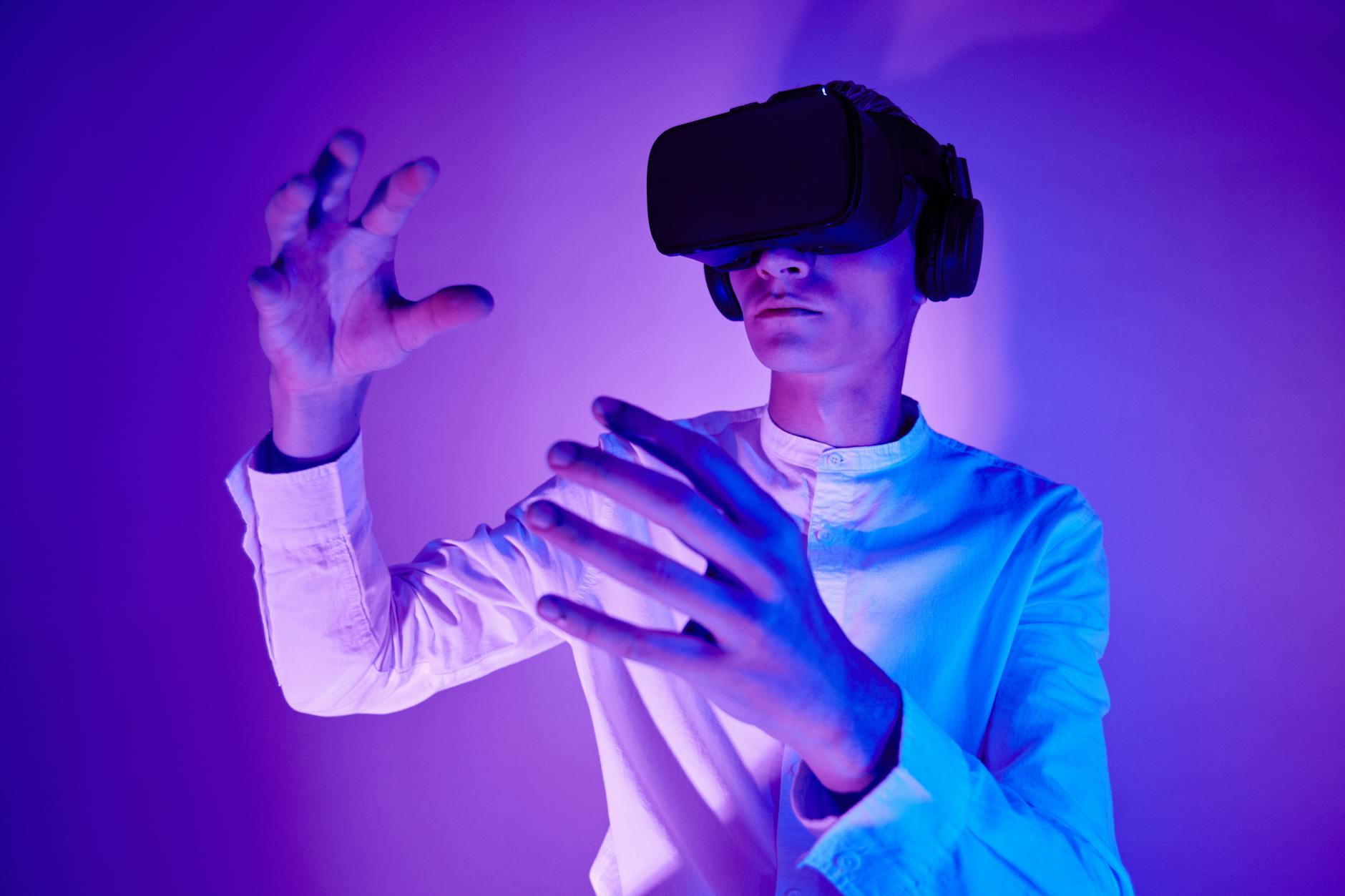
The question, "what is the metaverse concept?" often conjures images of futuristic virtual reality headsets and digital avatars. While these are certainly components, the core concept is far more profound and encompasses a broader vision of interconnected digital experiences. At its heart, the metaverse is envisioned as a persistent, shared, 3D virtual space where users can interact with each other, digital objects, and AI-driven entities in real-time. It's not a single application or a specific game, but rather a convergence of various technologies and platforms aiming to create a seamless, immersive digital layer over our physical world, and in some cases, entirely new virtual worlds. Think of it less as a destination and more as a new iteration of the internet – one that you inhabit rather than just browse.
This evolution from a flat, 2D web to an embodied, 3D internet brings with it a host of new possibilities and challenges. The foundational idea is to create a sense of 'presence,' where users feel like they are genuinely in the same space as others, regardless of their physical location. This is achieved through advanced graphics, spatial audio, and interactive environments. Unlike traditional online games, the metaverse aims for a level of continuity and interoperability, where digital assets and identities can potentially move between different virtual spaces. Imagine owning a digital outfit bought in one virtual store and being able to wear it in a different virtual social hub, or using a virtual tool purchased in one game to build something in another. This interoperability is a key, albeit challenging, aspect of the metaverse vision, often leveraging decentralized technologies like blockchain to manage digital ownership and identity.
Furthermore, the metaverse is not static; it is designed to be a living, evolving ecosystem. Users are not just consumers of content but also creators, contributing to the development of these virtual worlds through user-generated content, virtual economies, and social interactions. This emphasis on user participation and co-creation differentiates it from earlier forms of virtual environments. The concept draws heavily from science fiction, particularly Neal Stephenson’s 1992 novel *Snow Crash*, which first coined the term. However, today's technological advancements in areas like virtual reality (VR), augmented reality (AR), artificial intelligence (AI), and blockchain are making this once-fictional concept a tangible goal for major tech companies and startups alike. Understanding
the evolution of virtual reality is key to grasping the metaverse's potential.
Ultimately, when we ask what is the metaverse concept, we are asking about the next frontier of digital interaction – a space where work, play, shopping, and socializing converge into a rich, persistent, and increasingly immersive digital reality. It promises a new paradigm for how we connect, create, and conduct our lives in the digital realm, blurring the lines between our physical and virtual existences. This ambition requires significant technological advancement and widespread adoption, but the foundational pieces are steadily being put into place, paving the way for a truly transformative digital future.
The Pillars of the Metaverse: Technologies Driving the Vision
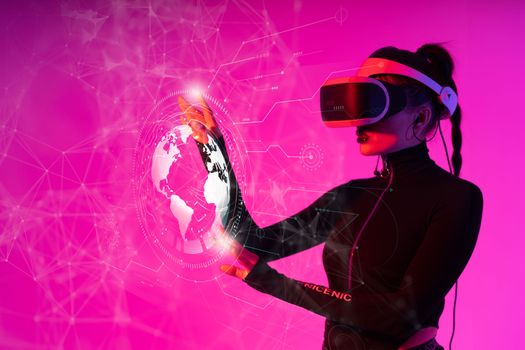 Photo: Atlantic Ambience / Pexels
The grand vision of what is the metaverse concept would remain purely theoretical without the convergence of several cutting-edge technologies. These technological pillars are not merely supporting elements; they are the very fabric from which the metaverse is being woven. Understanding these components is crucial to grasping the feasibility and potential of this evolving digital frontier.
**Virtual Reality (VR) and Augmented Reality (AR):** These are perhaps the most recognizable entry points into the metaverse. VR headsets provide complete immersion, transporting users into fully digital environments, while AR overlays digital information onto the real world, blending physical and virtual realities. Both are essential for creating the sense of 'presence' and immersion that defines the metaverse. They offer new interfaces for interaction, moving beyond traditional screens to embodied experiences where users can manipulate digital objects and navigate spaces with natural movements. Advanced haptic feedback systems further enhance this, allowing users to 'feel' virtual textures or impacts, deepening the illusion of physical presence within the digital world.
**Artificial Intelligence (AI) and Machine Learning (ML):** AI plays a multifaceted role in the metaverse. It powers non-player characters (NPCs) and virtual assistants, making interactions more dynamic and realistic. AI algorithms can generate vast amounts of digital content, from landscapes to characters, reducing development time and enabling more expansive virtual worlds. Furthermore, AI can personalize user experiences, adapt environments based on user behavior, and even moderate content to maintain safe and engaging spaces. Machine learning, a subset of AI, refines these processes over time, making the metaverse more intelligent and responsive to its inhabitants.
**Blockchain Technology and Non-Fungible Tokens (NFTs):** This is where the concept of digital ownership and verifiable scarcity truly takes hold within the metaverse. Blockchain provides a decentralized, immutable ledger for tracking ownership of digital assets. NFTs, built on blockchain, represent unique digital items – from avatars and clothing to virtual land and artwork. This technology allows users to truly 'own' their digital possessions, fostering robust virtual economies. It enables interoperability, theoretically allowing assets to be moved between different metaverse platforms, and empowers creators to monetize their digital creations directly, fostering a new paradigm of digital entrepreneurship. This verifiable ownership is a fundamental shift from traditional online games where users often only 'license' digital goods.
**Advanced Networking and Edge Computing:** A truly seamless and persistent metaverse requires ultra-low latency and massive bandwidth to handle the immense data flow of real-time 3D environments, countless concurrent users, and complex interactions. 5G and future wireless technologies are critical for this, enabling faster data transmission and reliable connections. Edge computing, which processes data closer to the source (i.e., the user's device), reduces lag and improves responsiveness, ensuring that virtual experiences feel immediate and fluid. Without robust networking infrastructure, the immersive quality of the metaverse would be severely hampered, leading to disconnections and a fragmented user experience.
**3D Modeling and Spatial Computing:** The visual foundation of the metaverse relies on sophisticated 3D modeling tools to create detailed environments, objects, and avatars. Spatial computing refers to the ability of software to understand and interact with the physical world in three dimensions, bridging the gap between digital and physical spaces. This includes technologies like digital twins, which are virtual replicas of physical objects or systems, allowing for simulations and interactions that mirror the real world. These tools allow for the creation of rich, interactive, and believable virtual spaces, essential for the immersive experience that defines the metaverse. Together, these technologies form the complex ecosystem that is bringing the metaverse from concept to reality, creating an entirely new dimension of digital interaction and economy.
Exploring the Metaverse Experience: Beyond Gaming
 Photo: Tima Miroshnichenko / Pexels
When considering what is the metaverse concept, it's easy to default to the idea of an advanced video game. While gaming platforms like Roblox, Fortnite, and Decentraland offer glimpses into metaverse-like experiences, the true potential of the metaverse stretches far beyond mere entertainment. It aims to integrate seamlessly into every facet of our digital and, eventually, even our physical lives, offering new paradigms for work, education, social interaction, commerce, and creative expression.
**Social Interaction and Community Building:** At its core, the metaverse is about connection. It offers new ways for people to socialize, attend virtual events, and build communities that transcend geographical boundaries. Imagine attending a concert with friends from across the globe, not just watching it on a screen, but being 'there' together as avatars, experiencing the atmosphere, and interacting in real-time. Virtual social hubs are already emerging, providing spaces for casual meetups, organized discussions, and shared experiences that foster a deeper sense of belonging than traditional social media. This embodied presence is a key differentiator, making interactions feel more authentic and impactful than a video call or text chat. The ability to express oneself through highly customizable avatars further enhances social dynamics, allowing for unique digital identities.
**Work and Productivity in Virtual Spaces:** The metaverse is poised to revolutionize the way we work. Remote work, already a global norm, could evolve into truly immersive virtual offices where colleagues can collaborate in 3D environments, hold meetings around virtual whiteboards, and even develop products together in shared digital spaces. Companies are already experimenting with virtual meeting rooms that offer a greater sense of presence and engagement than traditional video conferencing. Training and simulation, particularly for complex or dangerous tasks, can be conducted in highly realistic virtual environments, offering hands-on experience without physical risks. This allows for repeated practice and detailed analysis, accelerating learning curves and improving operational safety. The metaverse could also facilitate new forms of digital entrepreneurship, allowing individuals to create and sell virtual goods and services within these burgeoning economies.
**Education and Learning:** The potential for education within the metaverse is immense. Imagine taking a virtual field trip to ancient Rome, dissecting a virtual frog in a biology class, or exploring the human anatomy in 3D. The immersive nature of the metaverse can make learning more engaging, interactive, and accessible. Students could collaborate on projects in shared virtual classrooms, participate in historical reenactments, or conduct scientific experiments in simulated environments. This goes beyond static textbooks, offering dynamic and experiential learning opportunities that cater to different learning styles and make complex subjects more intuitive and understandable.
Exploring immersive learning technologies reveals the path forward for education in this new era.
**Commerce and Digital Economies:** The metaverse presents a vast new frontier for commerce. Brands can create virtual stores where customers can browse 3D products, try on digital clothing for their avatars, and even attend virtual fashion shows. NFTs enable the ownership and trade of unique digital assets, from art and collectibles to virtual real estate, fostering entirely new digital economies. This allows for direct-to-avatar sales and a new ecosystem of digital designers, creators, and entrepreneurs. The ability to own and transfer digital assets securely underpins this economic model, giving value to virtual goods and services in a way that was previously difficult to achieve. The metaverse is not just a place to spend money; it's a place to earn it, through creation, trade, and participation in its burgeoning digital markets.
**Creative Expression and Entertainment:** Beyond traditional gaming, the metaverse offers unprecedented opportunities for creative expression. Artists can build interactive installations, musicians can host virtual concerts, and designers can craft entire virtual worlds. Users can customize their avatars, design virtual homes, and create their own content, contributing to a vibrant and diverse digital culture. The entertainment landscape will broaden to include fully immersive narrative experiences, interactive theater, and new forms of digital art that simply aren't possible in our physical world or on 2D screens. The metaverse empowers individuals to become creators and participants in a shared cultural space, fostering innovation and pushing the boundaries of what digital entertainment can be.
Challenges and the Road Ahead for the Metaverse
Photo: Atlantic Ambience / Pexels
While the promise of what is the metaverse concept is incredibly exciting, its full realization faces significant hurdles. These challenges are not merely technical; they span ethical, economic, and social dimensions, requiring careful consideration and collaborative solutions from developers, policymakers, and users alike.
**Interoperability and Standardization:** One of the most significant challenges is achieving true interoperability. For the metaverse to be a unified, seamless experience, digital assets, identities, and even user experiences need to be able to move freely between different platforms and virtual worlds. Currently, many platforms operate in silos, much like individual apps on a smartphone that don't easily share data. Establishing universal standards and protocols for asset formats, identity management, and data transfer is crucial but incredibly complex, requiring cooperation among competing tech giants. Without this, the metaverse risks becoming a collection of disconnected virtual islands rather than a cohesive digital universe.
**Privacy, Security, and Data Governance:** The immersive and persistent nature of the metaverse raises profound concerns about privacy and data security. With users spending more time and sharing more personal data in virtual spaces, the potential for data breaches, surveillance, and misuse of personal information is amplified. Establishing robust data governance frameworks, ensuring user control over their digital identities and data, and implementing strong cybersecurity measures are paramount. The decentralized nature of some metaverse components, while offering benefits, also presents challenges in accountability and regulation, making it harder to enforce rules or protect users from malicious actors. Protecting user data in a 3D, persistent environment is a far more complex task than in traditional web browsing.
**Accessibility and Digital Divide:** For the metaverse to be truly inclusive, it must be accessible to everyone, regardless of their economic status, geographical location, or physical abilities. The high cost of advanced VR/AR hardware, the need for high-speed internet, and potential barriers for individuals with disabilities could exacerbate the existing digital divide. Developers must focus on creating inclusive design principles, developing more affordable access devices, and ensuring that interfaces are adaptable to diverse needs. If access to the metaverse is limited to a privileged few, its potential for widespread societal benefit will be severely curtailed.
**Content Moderation and Ethical Considerations:** As an open and user-generated content platform, the metaverse will face immense challenges in content moderation. How do we prevent harassment, hate speech, misinformation, and other harmful content in a 3D, real-time environment? Establishing effective moderation strategies that balance freedom of expression with user safety and well-being is critical. Ethical concerns also extend to digital addiction, the psychological impact of extended immersion, and the potential blurring of lines between reality and virtuality. Companies building the metaverse have a profound responsibility to design these spaces with ethical considerations at the forefront, prioritizing user safety and mental health.
**Technological Limitations:** Despite rapid advancements, current technology still has limitations. VR headsets can be bulky and cause motion sickness for some users. The processing power required for highly realistic, interactive 3D environments with many concurrent users is immense. Battery life, haptic feedback fidelity, and realistic avatar rendering still need significant improvement to achieve the seamless, lifelike experiences envisioned. Overcoming these hardware and software limitations will require continued innovation and substantial investment in research and development. The road to a fully realized metaverse is a marathon, not a sprint, and these challenges demand ongoing innovation and collaboration across industries.