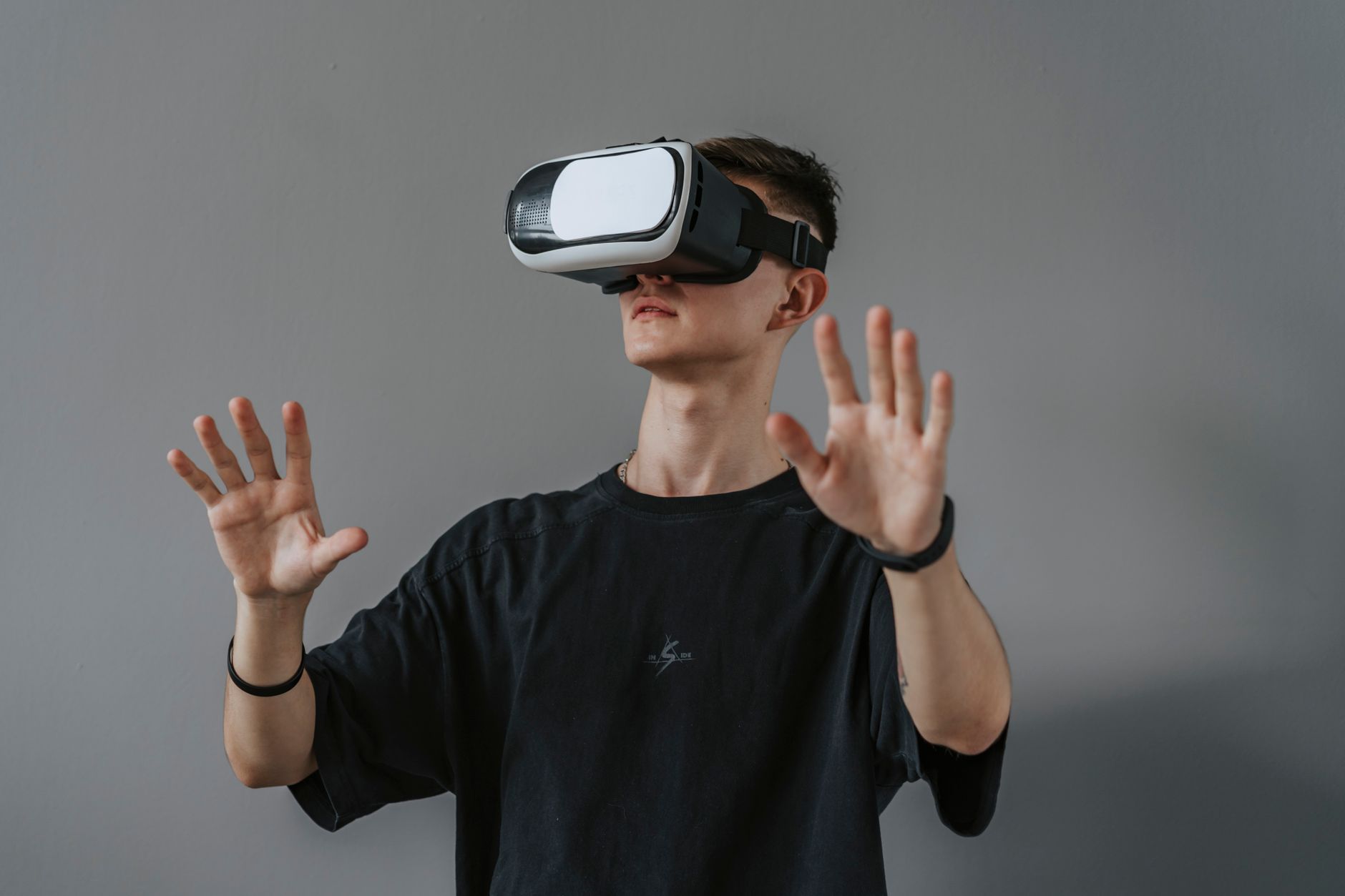
What is Augmented Reality Applications? Explore Its Transformative Power
Uncover how AR is reshaping our world, blending digital information with real environments for unprecedented experiences.
Dive into AR's WorldKey Takeaways
- ✓ Augmented Reality (AR) overlays digital information onto the real world, enhancing perception.
- ✓ Unlike Virtual Reality (VR), AR keeps users connected to their physical surroundings.
- ✓ Major sectors like healthcare, retail, manufacturing, and education are leveraging AR.
- ✓ AR applications range from simple smartphone filters to complex industrial training simulations.
How It Works
AR devices use cameras, sensors, and GPS to capture real-world data and understand the user's surroundings. This data forms the foundation for digital overlay.
Sophisticated software processes this data, identifying surfaces, objects, and spatial relationships. It then creates a digital map of the environment where virtual objects can be placed.
Based on the processed data, digital content (3D models, information, animations) is rendered and seamlessly overlaid onto the live view of the real world. This creates the 'augmented' experience.
Users interact with AR applications through gestures, voice commands, or touch, manipulating the digital content or moving through the augmented space. This interaction drives the application's utility.
Understanding the Core: What Exactly is Augmented Reality?
 Photo: Pixabay / Pexels
Transformative Applications Across Industries
 Photo: RDNE Stock project / Pexels
The Future is Augmented: Emerging Trends and Innovations
 Photo: Darlene Alderson / Pexels
Navigating the Augmented World: Tips for Adoption and Common Pitfalls
 Photo: Tima Miroshnichenko / Pexels
Comparison
| Feature | Augmented Reality (AR) | Virtual Reality (VR) | Mixed Reality (MR) |
|---|---|---|---|
| Immersion Level | Low to Medium (overlays digital onto real) | High (fully synthetic environment) | High (blends real and virtual, allows interaction) |
| Real World View | Always visible | Blocked (user is in virtual world) | Visible, with integrated digital elements |
| Hardware | Smartphones, tablets, smart glasses | Headsets (e.g., Oculus, HTC Vive) | Advanced headsets (e.g., HoloLens) |
| Interaction | Digital content interacts with real world | User interacts within virtual world | Digital and real objects interact with each other |
| Primary Use Cases | Navigation, gaming, education, retail, industrial guidance | Gaming, training simulations, virtual tours, therapy | Complex industrial design, remote assistance, immersive collaboration |
What Readers Say
"Using AR apps for interior design has been a game-changer. I can visualize furniture in my living room before buying, which saves so much time and prevents costly mistakes. It's incredibly accurate and easy to use."
Sarah J. · Austin, TX"Our manufacturing plant integrated AR for assembly line training, and the results are phenomenal. New hires learn faster and make fewer errors, proving what is augmented reality applications' true value in efficiency."
Mark D. · Seattle, WA"As a surgeon, the precision offered by AR overlays during complex procedures is revolutionary. It allows for better planning and execution, ultimately improving patient outcomes significantly."
Dr. Emily R. · Boston, MA"While some AR apps are still a bit clunky on older phones, the potential is undeniable. I love using AR for interactive tours of historical sites; it truly brings history to life in a way textbooks can't."
Alex P. · Miami, FL"My kids absolutely adore the educational AR apps. Learning about planets or dinosaurs suddenly becomes an interactive, immersive experience right in our living room. It makes learning fun and memorable."
Lisa K. · Denver, COFrequently Asked Questions
What is the main difference between Augmented Reality (AR) and Virtual Reality (VR)?
The main distinction lies in immersion. VR completely replaces the user's real environment with a simulated one, requiring a headset for full immersion. AR, however, overlays digital information onto the real world, allowing users to remain connected to their physical surroundings while enhancing them with virtual content. AR often uses devices like smartphones or smart glasses.
Is augmented reality safe for long-term use?
While AR is generally safe, concerns exist regarding potential eye strain from prolonged screen use and spatial disorientation for some individuals. Responsible use, including taking breaks and ensuring proper lighting, is advised. As the technology evolves, hardware improvements are continually addressing comfort and safety aspects.
How can I start experiencing augmented reality applications?
You can start experiencing AR today with most modern smartphones. Many apps, from games like Pokémon GO to retail apps like IKEA Place or Snapchat filters, utilize AR. Simply download an AR-enabled app from your device's app store and point your camera at your surroundings to begin. Dedicated AR glasses offer a more immersive, hands-free experience.
What is the cost involved in developing augmented reality applications?
The cost of developing AR applications varies widely depending on complexity, features, platform (iOS, Android, web, dedicated hardware), and the development team's expertise. Simple AR apps might cost tens of thousands, while complex enterprise solutions or highly interactive games can run into hundreds of thousands or even millions of dollars. Factors like 3D model creation, backend integration, and ongoing maintenance all contribute to the overall expense.
How do augmented reality applications compare to traditional methods in education or training?
AR applications offer significant advantages over traditional methods by providing interactive, immersive, and hands-on learning experiences that can be difficult or expensive to replicate physically. They improve engagement, retention, and understanding, especially for complex subjects or practical skills, by allowing learners to visualize and interact with concepts in a real-world context without risk or high costs. This often leads to faster learning curves and better outcomes.
Who stands to benefit most from augmented reality applications?
A wide range of users and industries benefit from AR. Consumers gain enhanced shopping experiences, engaging entertainment, and improved navigation. Businesses in retail, manufacturing, healthcare, and education can achieve greater efficiency, better training, improved customer service, and innovative marketing. Essentially, anyone who can benefit from overlaying digital information onto their real-world view to enhance understanding or interaction stands to gain.
Are there privacy concerns with augmented reality applications?
Yes, privacy is a significant concern. AR applications often require access to your device's camera, microphone, and location data to function. This raises questions about what data is collected, how it's stored, and who has access to it. Users should carefully review app permissions and privacy policies. Developers and companies must prioritize robust data protection measures and transparent data handling practices to build trust.
What are the future trends for augmented reality applications?
Future trends include the development of more comfortable and capable AR glasses, increased integration with Artificial Intelligence for more intelligent and context-aware experiences, the rise of persistent AR content (a 'digital layer' over the real world), and deeper integration into daily life through smart cities and connected environments. We can expect more seamless interaction, personalized content, and broader accessibility as the technology matures.
The world of augmented reality applications is constantly expanding, offering unprecedented opportunities for innovation and engagement. Whether you're a consumer looking for enhanced experiences or a business seeking transformative solutions, understanding and embracing AR is key to unlocking future potential. Explore its capabilities today and step into a new dimension of interaction.