✓ AI powers recommendation engines on streaming services and e-commerce platforms.
✓ Autonomous vehicles rely heavily on AI for perception, decision-making, and navigation.
✓ Healthcare utilizes AI for disease diagnosis, drug discovery, and personalized treatment plans.
✓ AI is crucial for cybersecurity, detecting threats and anomalies in real-time.
How It Works
1
Data Collection & Preprocessing
AI systems require vast amounts of data to learn from. This data is collected from various sources and then cleaned and formatted to be usable.
2
Model Training
Algorithms are trained on the preprocessed data, identifying patterns and relationships. This process involves adjusting parameters to optimize performance for a specific task.
3
Inference & Prediction
Once trained, the AI model can make predictions or take actions on new, unseen data. It applies the learned patterns to provide outputs relevant to its programming.
4
Continuous Learning & Refinement
Many AI systems are designed to continuously learn and improve over time. Feedback from their predictions or actions helps refine their models for better accuracy and efficiency.
AI in Everyday Life: Practical Applications
Photo: Ketut Subiyanto / Pexels
Artificial intelligence, once a concept confined to science fiction, has seamlessly woven itself into the fabric of our daily lives. From the moment we wake up until we go to sleep, we interact with AI-powered systems, often without even realizing it. One of the most ubiquitous applications is in our smartphones. Voice assistants like Siri, Google Assistant, and Alexa leverage sophisticated natural language processing (NLP) and machine learning algorithms to understand our commands, answer questions, and control smart home devices. These systems continuously learn from our speech patterns and preferences, becoming more accurate and personalized over time. Beyond voice assistants, AI is behind the personalized recommendations we receive on streaming platforms like Netflix and Spotify, which analyze our viewing and listening history to suggest new content we might enjoy. E-commerce sites, such as Amazon, also use AI to recommend products based on our browsing history, purchase patterns, and even items others with similar tastes have bought. This not only enhances the user experience but also drives sales for businesses.
Another significant area where AI plays a crucial role is in digital advertising. AI algorithms analyze vast datasets of user behavior, demographics, and online activity to deliver highly targeted advertisements. This ensures that users see ads that are more relevant to their interests, increasing the effectiveness of marketing campaigns. Think about the ads you see on social media or while browsing websites – they are rarely random. Furthermore, AI is integral to spam detection in email services, effectively filtering out unwanted messages and protecting users from phishing attempts. It learns to identify patterns indicative of spam, such as suspicious links or unusual senders, and quarantines them before they reach your inbox. Even the predictive text feature on your phone keyboard uses a form of AI, learning your writing style and commonly used phrases to suggest words as you type, significantly speeding up communication. These everyday examples barely scratch the surface of how AI is transforming society, making our interactions with technology more intuitive and efficient.
Transforming Industries: AI Across Sectors
Photo: Kindel Media / Pexels
The impact of artificial intelligence extends far beyond personal convenience, fundamentally reshaping numerous industries and creating new paradigms for efficiency and innovation. In healthcare, AI is revolutionizing diagnostics, drug discovery, and patient care. AI-powered tools can analyze medical images, such as X-rays and MRIs, with remarkable accuracy, often identifying subtle anomalies that human eyes might miss, leading to earlier and more precise disease detection. Machine learning algorithms are accelerating the drug discovery process by simulating molecular interactions, predicting potential drug candidates, and optimizing clinical trials, dramatically reducing the time and cost associated with bringing new treatments to market. Personalized medicine is another frontier, where AI analyzes a patient's genetic profile, medical history, and lifestyle to tailor treatment plans that are most effective for them.
The financial sector is another prime beneficiary of AI. Banks and financial institutions use AI for fraud detection, analyzing transactional data in real-time to identify suspicious activities and prevent financial crimes. Algorithmic trading, driven by AI, executes trades at high speeds based on complex market analysis, seeking to capitalize on small price discrepancies. Furthermore, AI-powered chatbots are improving customer service, handling routine inquiries and providing instant support, freeing up human agents for more complex issues. In manufacturing, AI is central to optimizing production lines, predictive maintenance, and quality control. Robots equipped with AI can perform intricate tasks with precision, while machine learning models predict equipment failures before they occur, minimizing downtime and increasing operational efficiency.
The transportation sector is undergoing a profound transformation with AI at its core. Autonomous vehicles, from self-driving cars to delivery drones, rely on sophisticated AI systems for perception (understanding their surroundings), decision-making (navigating traffic, obeying laws), and control (executing maneuvers). AI also optimizes logistics and supply chains, predicting demand, optimizing routes, and managing inventory to reduce costs and improve delivery times. Even in agriculture, AI is being used for precision farming, monitoring crop health, predicting yields, and optimizing irrigation and fertilization, leading to more sustainable and productive practices. These industrial applications underscore the immense power of AI to drive progress and solve complex challenges on a grand scale.
The Future of Work: AI and Human Collaboration
Photo: Pavel Danilyuk / Pexels
As artificial intelligence continues to advance, a critical discussion revolves around its impact on the future of work and the evolving relationship between humans and machines. Far from replacing human workers entirely, AI is increasingly viewed as a powerful collaborator, augmenting human capabilities and automating repetitive, mundane, or dangerous tasks. This shift allows human employees to focus on more creative, strategic, and interpersonal aspects of their roles, leading to increased productivity and job satisfaction. For example, in customer service, AI chatbots can handle a large volume of common queries, providing instant responses and freeing human agents to address more complex or emotionally sensitive customer issues. This creates a more efficient and empathetic customer experience.
In creative industries, AI tools are assisting designers, writers, and artists by generating initial concepts, analyzing trends, or even producing drafts. A graphic designer might use AI to quickly generate multiple logo variations, or a writer might leverage AI to brainstorm ideas or refine grammar and style. This doesn't diminish the human creative role but enhances it, providing powerful tools for exploration and execution. Similarly, in fields requiring extensive data analysis, such as scientific research or financial modeling, AI can process and interpret vast datasets far quicker than any human, identifying patterns and insights that would otherwise be impossible to detect. This enables researchers to formulate hypotheses more efficiently and make data-driven decisions with greater confidence. The synergy between human intuition and AI's analytical power is unlocking unprecedented levels of innovation. Understanding the ethical implications of AI in the workplace, such as bias in algorithms and job displacement concerns, remains crucial as we navigate this evolving landscape.
Furthermore, AI is democratizing access to specialized skills and knowledge. For instance, AI-powered translation tools are breaking down language barriers, enabling global collaboration and communication. AI in education is personalizing learning experiences, adapting content and pace to individual student needs, and providing real-time feedback. Training programs are emerging to equip the workforce with AI literacy and skills, focusing on areas where human-AI collaboration is most effective. The future of work will likely involve a hybrid workforce where humans and AI operate in tandem, each bringing their unique strengths to the table. This collaboration promises to unlock new levels of productivity, foster innovation, and create new types of jobs that are currently unimaginable, emphasizing the importance of continuous learning and adaptability for the human workforce.
Challenges and Ethical Considerations in AI Deployment
Photo: Google DeepMind / Pexels
While the applications of artificial intelligence are vast and transformative, its widespread deployment also brings forth significant challenges and ethical considerations that demand careful attention. One of the primary concerns revolves around data privacy and security. AI systems often require access to massive amounts of personal and sensitive data to function effectively, raising questions about how this data is collected, stored, and used. Ensuring robust data protection measures and transparent data governance policies is paramount to prevent misuse and maintain public trust. The risk of data breaches, where personal information could be exposed, is a constant threat that necessitates continuous vigilance and advanced cybersecurity protocols.
Another critical issue is algorithmic bias. AI models learn from the data they are trained on, and if this data reflects existing societal biases (e.g., historical discrimination in hiring, lending, or law enforcement), the AI system can perpetuate and even amplify these biases. This can lead to unfair or discriminatory outcomes in areas such as loan approvals, job applications, or even criminal justice decisions. Addressing algorithmic bias requires careful data curation, diverse training datasets, and rigorous testing for fairness, alongside the development of explainable AI (XAI) to understand how decisions are made.
Job displacement is also a prominent concern. As AI automates more tasks, there is a legitimate fear that many jobs will become obsolete, leading to unemployment and economic disruption. While AI is expected to create new jobs, the transition period and the need for workforce retraining pose significant societal challenges. Policymakers and educators must work together to prepare the workforce for an AI-driven economy, focusing on upskilling and reskilling initiatives.
Ethical questions surrounding accountability, transparency, and control are equally important. When an AI system makes a mistake or causes harm, who is responsible? The developer, the deployer, or the AI itself? The 'black box' nature of some complex AI models makes it difficult to understand their decision-making processes, hindering accountability. Furthermore, the potential for autonomous weapons systems, the misuse of facial recognition technology, and the spread of deepfakes raise serious ethical dilemmas regarding human control, privacy, and the integrity of information.
Addressing these challenges requires a multidisciplinary approach involving technologists, ethicists, policymakers, and the public to develop responsible AI frameworks, regulations, and ethical guidelines. Only through proactive and thoughtful engagement can we harness the power of AI while mitigating its risks and ensuring its benefits are shared equitably.
Comparison
Feature
Traditional Approach
AI-Powered Approach
Benefits of AI
Data Analysis
Manual, limited scale
Automated, massive scale
Faster insights, pattern recognition
Customer Service
Human agents, limited hours
Chatbots, 24/7 availability
Instant support, reduced costs
Fraud Detection
Rule-based, reactive
Machine learning, proactive
Real-time detection, lower false positives
Medical Diagnosis
Human interpretation
AI image analysis, predictive models
Higher accuracy, earlier detection
What Readers Say
★★★★★
"I never fully understood what artificial intelligence is used for until I saw it in action with my smart home devices. It's incredible how responsive and helpful my voice assistant has become, simplifying so many daily tasks."
Sarah J. · Austin, TX
★★★★★
"Our company implemented AI for predictive maintenance, and it's been a game-changer. We've significantly reduced downtime and saved thousands by anticipating equipment failures before they happen."
David L. · Seattle, WA
★★★★★
"As a healthcare professional, I've witnessed firsthand how AI is used for faster and more accurate diagnoses. It's genuinely improving patient outcomes and allowing us to focus on complex care."
Maria G. · Miami, FL
★★★★★
"While AI has made my online shopping experience much more personalized, I do have some concerns about data privacy. The benefits are clear, but the ethical considerations need to be continuously addressed."
Ethan K. · Denver, CO
★★★★★
"From my commute with navigation apps to the spam filter in my email, it's clear what artificial intelligence is used for in making everyday life smoother and more efficient. It's truly indispensable now."
Olivia P. · Chicago, IL
Frequently Asked Questions
What are the most common applications of artificial intelligence today?
The most common applications of AI today include virtual personal assistants (like Siri or Alexa), recommendation engines (for streaming, shopping), fraud detection in finance, autonomous vehicles, medical imaging analysis, and spam filtering. AI is deeply integrated into many digital services we use daily.
Is AI primarily used to replace human jobs?
While AI can automate repetitive tasks, its primary use is increasingly seen as augmenting human capabilities rather than replacing them entirely. AI can handle data analysis, prediction, and automation, allowing humans to focus on creativity, critical thinking, and interpersonal skills, often creating new job roles.
How can I start learning about what artificial intelligence is used for?
To start learning, you can explore online courses from platforms like Coursera or edX, read books on AI for beginners, follow reputable tech news outlets, and experiment with consumer-facing AI tools. Understanding basic concepts like machine learning and neural networks is a great first step.
Is investing in AI technology worth it for small businesses?
For small businesses, investing in AI can be highly valuable. It can optimize customer service with chatbots, personalize marketing efforts, automate administrative tasks, and provide data insights for strategic decisions. The key is to identify specific pain points AI can efficiently address and start with accessible, scalable solutions.
How does AI compare to traditional software in terms of problem-solving?
Traditional software follows explicit, pre-programmed rules to solve problems, excelling at well-defined tasks. AI, particularly machine learning, can learn from data, adapt to new information, and solve complex problems without explicit programming, making it adept at tasks involving pattern recognition, prediction, and decision-making in dynamic environments.
Who should be concerned about what artificial intelligence is used for?
Everyone should be aware of what artificial intelligence is used for, from consumers interacting with AI-powered products to business leaders making strategic decisions, and policymakers shaping regulations. Understanding AI's capabilities and limitations is crucial for navigating our increasingly technology-driven world responsibly.
Are there risks associated with the widespread use of artificial intelligence?
Yes, risks include issues like data privacy breaches, algorithmic bias leading to unfair outcomes, job displacement, the potential for misuse (e.g., autonomous weapons), and the 'black box' problem where AI decisions are difficult to interpret. Addressing these requires ongoing ethical considerations and robust regulatory frameworks.
What future trends are expected in what artificial intelligence is used for?
Future trends include more pervasive and intuitive AI in everyday objects (IoT), advancements in personalized medicine and drug discovery, further development of autonomous systems, greater integration of AI in scientific research, and increasingly sophisticated human-AI collaboration tools that enhance productivity across all sectors.
The applications of artificial intelligence are constantly expanding, fundamentally changing how we live and work. By understanding what artificial intelligence is used for, you can better prepare for its ongoing impact and leverage its power for innovation and efficiency in your life and business.

 Photo: Ketut Subiyanto / Pexels
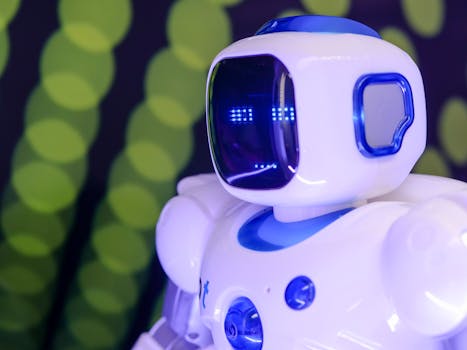 Photo: Kindel Media / Pexels
 Photo: Pavel Danilyuk / Pexels
 Photo: Google DeepMind / Pexels