
What is 5G Technology? Your Guide to the Next-Gen Network
Dive into the fifth generation of cellular technology, unlocking unprecedented speed and connectivity for a smarter world.
Explore 5G NowKey Takeaways
- ✓ 5G is the fifth generation of cellular technology, succeeding 4G LTE.
- ✓ It promises speeds up to 100 times faster than 4G, with peak theoretical speeds of 10 Gigabits per second (Gbps).
- ✓ 5G significantly reduces latency to as low as 1 millisecond, crucial for real-time applications.
- ✓ It enables massive connectivity for billions of devices, forming the backbone for the Internet of Things (IoT).
How It Works
5G introduces a new global standard for the air interface, optimized for greater bandwidth and lower latency. This new radio technology allows 5G to operate across a broader spectrum of frequencies.
While 5G uses various spectrums, mmWave offers extremely high frequencies (24-100 GHz) for ultra-fast speeds. However, these signals have shorter ranges and are easily blocked by obstacles, requiring more, smaller cell sites.
Base stations are equipped with hundreds of antennas to send and receive data simultaneously, significantly increasing capacity and efficiency. This allows for more simultaneous connections and better signal quality.
Beamforming directs radio signals precisely towards individual devices, improving signal strength and reducing interference. Small cell technology uses smaller, lower-power base stations placed closer together to provide better coverage in dense areas, especially for mmWave.
Understanding the Core: What is 5G Technology?
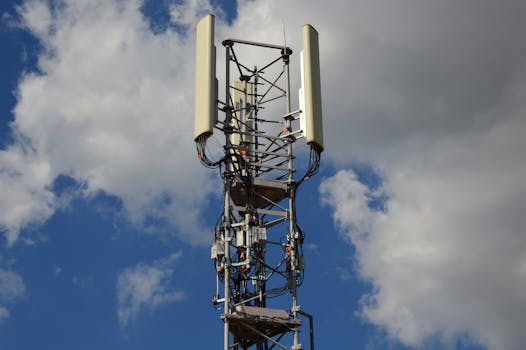 Photo: Ulrick Trappschuh / Pexels
The Pillars of 5G: Speed, Latency, and Capacity
 Photo: Brett Sayles / Pexels
Transformative Applications and the Future of 5G
 Photo: ainc T / Pexels
Navigating the 5G Landscape: Challenges and Considerations
Comparison
| Feature | 5G | 4G LTE | 3G |
|---|---|---|---|
| Peak Speed (Theoretical) | 10 Gbps | 1 Gbps | 7.2 Mbps |
| Latency | 1 ms | 50-100 ms | 100-500 ms |
| Capacity | Massive (billions of devices) | High (millions of devices) | Limited |
| Network Slicing | ✓ | ✗ | ✗ |
| Primary Use Cases | IoT, AI, AR/VR, Autonomous Driving, Smart Cities | Mobile internet, video streaming | Voice calls, basic internet |
What Readers Say
"Understanding what is 5G technology became so much clearer after reading this. My new 5G phone's speeds are incredible; I can download entire seasons of shows in minutes, something unimaginable on 4G."
Sarah J. · Austin, TX"This article provided an excellent deep dive into the technical aspects without being overly jargon-heavy. The low latency of 5G is already making a huge difference in my online gaming experience, virtually eliminating lag."
Mark L. · Seattle, WA"As a medical professional, the potential of 5G for telemedicine and remote operations is truly exciting. This explanation of what is 5G technology highlights its transformative impact on healthcare, which I'm already seeing in early pilot programs."
Dr. Elena Petrov · Boston, MA"While 5G speeds are fantastic in downtown areas, coverage can still be spotty in some suburban parts of Denver. However, when I do get a strong 5G signal, it's undeniably a superior experience to 4G."
David R. · Denver, CO"I never fully grasped what is 5G technology until now. The article's breakdown of its capacity and how it supports so many devices simultaneously really opened my eyes to how smart cities will function."
Chloe K. · Miami, FLFrequently Asked Questions
What is 5G technology, in simple terms?
5G is the fifth generation of cellular technology, designed to deliver significantly faster speeds, incredibly low latency, and the ability to connect a massive number of devices simultaneously. It's a foundational network for future innovations like autonomous cars, advanced IoT, and immersive AR/VR experiences, offering a major leap from 4G.
Is 5G safe for my health?
Extensive research by organizations like the World Health Organization (WHO) and the FCC has consistently shown that 5G technology, operating within established international guidelines, does not pose a health risk. The radio frequencies used are non-ionizing, meaning they don't damage DNA, and exposure levels are well below safety limits.
How can I get 5G service?
To access 5G service, you typically need a 5G-compatible device (like a 5G smartphone or router) and a 5G plan from your mobile carrier. You also need to be in an area where your carrier has deployed 5G network coverage. Check your carrier's coverage map for availability in your location.
Is 5G more expensive than 4G?
Initially, 5G-compatible devices and plans might have been at a premium. However, as 5G becomes more widespread, prices for devices are becoming more competitive, and many carriers are including 5G access in their standard plans without a significant price increase. The overall value often increases due to enhanced performance.
How does 5G compare to Wi-Fi?
5G is designed for mobile connectivity over a wide area, while Wi-Fi is typically for local area network connectivity within a home or office. While 5G can offer comparable or even faster speeds than many home Wi-Fi networks, and can even serve as an alternative to home broadband (Fixed Wireless Access), they are complementary technologies, each serving different primary purposes. Many devices will use both.
Who benefits most from what is 5G technology?
Virtually everyone will benefit from 5G, but early adopters and specific industries will see immediate impacts. Consumers will experience faster downloads and smoother streaming. Businesses will leverage it for IoT, cloud computing, and remote operations. Industries like manufacturing (smart factories), transportation (autonomous vehicles), and healthcare (telemedicine) are poised for significant transformation due to 5G's capabilities.
Are there any privacy risks with 5G?
While 5G itself doesn't inherently introduce new privacy risks compared to previous generations, the increased connectivity and proliferation of IoT devices it enables mean more data is being generated and transmitted. This underscores the importance of robust cybersecurity measures, data encryption, and user awareness regarding privacy settings and data sharing practices across all connected devices and services.
What does the future hold for 5G technology?
The future of 5G involves continued expansion of coverage and capacity, particularly in mid-band spectrums for a balance of speed and reach. We'll see the refinement of advanced features like network slicing and edge computing, enabling more sophisticated applications. Furthermore, research is already underway for 6G, which aims to further enhance capabilities, potentially integrating AI natively and exploring even higher frequency bands for even more extreme performance.
Now that you have a comprehensive understanding of what is 5G technology, its incredible potential, and its transformative applications, are you ready to experience the next generation of connectivity? Explore 5G plans and devices available in your area today and step into the future of ultra-fast, low-latency, and massively connected experiences.