✓ Massive Machine Type Communications (mMTC) supports billions of connected IoT devices.
✓ 5G utilizes a combination of low-band, mid-band, and high-band (mmWave) spectrums.
How It Works
1
Enhanced Mobile Broadband (eMBB)
This aspect of 5G focuses on delivering significantly higher speeds and greater capacity than 4G. It enables faster downloads, smoother streaming of 8K video, and more reliable mobile internet experiences even in crowded areas.
2
Ultra-Reliable Low-Latency Communications (URLLC)
URLLC is critical for applications requiring instantaneous response times, with latency as low as 1 millisecond. This enables breakthroughs in autonomous driving, remote surgery, and industrial automation where real-time control is paramount for safety and efficiency.
3
Massive Machine Type Communications (mMTC)
mMTC allows 5G networks to efficiently connect a vast number of low-power, low-cost devices. This is the backbone for the Internet of Things (IoT), supporting billions of sensors and smart devices across smart cities, agriculture, and environmental monitoring, all communicating with minimal power consumption.
4
Network Slicing and Edge Computing
5G introduces network slicing, enabling operators to create multiple virtual networks optimized for specific services on a shared infrastructure. Edge computing brings data processing closer to the user, reducing latency further and enhancing security for demanding applications.
Unpacking the Core: What Exactly is 5G Technology?
Photo: Ulrick Trappschuh / Pexels
Before diving into the myriad benefits, it's crucial to understand the foundational elements of 5G technology itself. 5G, the fifth generation of cellular mobile communication, represents a monumental leap forward from its predecessor, 4G LTE. It isn't just about faster internet; it's a complete paradigm shift designed to support an entirely new ecosystem of connected devices and services. At its heart, 5G is engineered to deliver three primary advancements: vastly improved speeds, significantly reduced latency, and the capacity to connect an unprecedented number of devices. This is achieved through a combination of innovative technologies, including the use of millimeter-wave (mmWave) frequencies, massive MIMO (Multiple Input, Multiple Output) antennas, and beamforming.
Traditional cellular networks, including 4G, primarily operate on lower frequency bands, which offer broad coverage but limited bandwidth. 5G expands into higher frequency bands, particularly mmWave, which can carry massive amounts of data at extremely high speeds. However, these higher frequencies have a shorter range and are more susceptible to obstruction by buildings or even heavy rain. To counteract this, 5G networks deploy a denser array of small cell base stations, working in conjunction with larger macro cells, to ensure comprehensive coverage. Massive MIMO antennas, another key component, allow base stations to send and receive data from many more users simultaneously, boosting both capacity and efficiency. Beamforming, a smart technology, directs radio signals precisely towards individual devices, rather than broadcasting them broadly, further enhancing signal quality and speed. These technical underpinnings are what empower 5G to unlock the transformative benefits we are beginning to see across various sectors, from consumer applications to industrial automation. Understanding these core mechanics helps contextualize why 5G is not merely an incremental upgrade but a foundational technology for the future. For a deeper dive into how these technologies compare, explore our guide on 4G vs 5G differences.
The true power of 5G lies in its ability to redefine what's possible across a multitude of industries, moving beyond just faster smartphone downloads. One of the most impactful 5G technology benefits is its role in advancing the Internet of Things (IoT). With its massive capacity for connecting billions of devices, 5G enables smart cities to become a reality, supporting everything from intelligent traffic management and environmental monitoring to smart streetlights and public safety systems. Imagine traffic lights that dynamically adjust based on real-time vehicle flow, or waste bins that signal when they need emptying – all powered by a ubiquitous 5G IoT network.
In manufacturing, 5G paves the way for Industry 4.0, facilitating fully automated factories where robots, sensors, and machinery communicate wirelessly and in real-time. Ultra-low latency allows for precision control of robotic arms, predictive maintenance based on sensor data, and augmented reality (AR) applications for technicians, leading to increased efficiency, reduced downtime, and safer working environments. The healthcare sector is also poised for a revolution. Remote surgery, enabled by 5G's URLLC (Ultra-Reliable Low-Latency Communications), allows specialists to operate on patients across vast distances with virtually no delay. Wearable health monitors can transmit vital signs continuously, providing real-time data to doctors and enabling proactive healthcare interventions. Telemedicine becomes more robust, supporting high-definition video consultations and remote diagnostics.
The automotive industry is another major beneficiary, with 5G being a critical enabler for autonomous vehicles. The ability to communicate instantly with other vehicles (V2V), infrastructure (V2I), and the cloud (V2C) is paramount for safe and efficient self-driving cars. 5G's low latency ensures that critical decisions are made in milliseconds, preventing accidents and optimizing traffic flow. Furthermore, 5G's high bandwidth is essential for transmitting the vast amounts of sensor data generated by autonomous vehicles. The entertainment and media industries will also see significant transformation. Beyond faster streaming, 5G supports truly immersive experiences like untethered virtual reality (VR) and augmented reality (AR), enabling new forms of gaming, interactive content, and live event broadcasts with multiple camera angles and personalized experiences. These industry-specific applications underscore that 5G is far more than just a speed upgrade; it's a foundational technology that will drive innovation and economic growth for decades to come, creating new business models and services that are currently unimaginable.
Empowering the Everyday: Consumer-Focused 5G Technology Benefits
Photo: 虎 曼 / Pexels
While 5G's industrial applications are transformative, its impact on the everyday consumer experience is equally profound and immediately noticeable. One of the most celebrated 5G technology benefits for individuals is the sheer speed it brings to mobile devices. Imagine downloading a full-length HD movie in mere seconds, or streaming 4K and even 8K content without any buffering, even in crowded areas like stadiums or concert venues. This enhanced mobile broadband (eMBB) capability significantly improves productivity for remote workers, students, and anyone relying on mobile connectivity for essential tasks. Video conferences become crystal clear and lag-free, cloud-based applications run seamlessly, and large file transfers are instantaneous, blurring the lines between mobile and fixed-line internet experiences. For many, 5G could even serve as a viable alternative to traditional home broadband, especially in areas where fiber optic connections are unavailable or expensive.
Beyond speed, 5G unlocks a new era for gaming and entertainment. Mobile gaming, already a massive industry, will be revolutionized by 5G's ultra-low latency. Cloud gaming platforms will offer console-quality experiences on the go, without the need for powerful local hardware, as the processing happens in the cloud with virtually no perceptible delay between your input and the game's response. This eliminates the frustrating lag that plagues current mobile cloud gaming. Furthermore, immersive technologies like Virtual Reality (VR) and Augmented Reality (AR) will become truly portable and untethered. Imagine experiencing a live concert in VR with friends from across the globe, feeling as though you're actually there, or using AR apps that seamlessly overlay digital information onto the real world with perfect synchronization. These experiences, previously limited by bandwidth and latency, will become mainstream thanks to 5G.
Another significant consumer benefit is the improved reliability and capacity of the network. In densely populated areas or at large events, 4G networks often struggle, leading to slow speeds and dropped connections. 5G's architecture, with its massive MIMO and dense small cell deployment, is designed to handle a far greater number of simultaneous connections without degradation in performance. This means more reliable connectivity for everyone, everywhere. Moreover, 5G will power a new generation of smart home devices, allowing for more complex and interconnected automation. From security systems that stream high-definition video continuously to smart appliances that communicate effortlessly, 5G will make the smart home truly intelligent and responsive. The enhanced security features embedded within 5G networks also offer greater peace of mind for consumers, protecting their data and privacy in an increasingly connected world. For those looking to upgrade, understanding the best 5G phones can help you harness these benefits.
Navigating the Future: Challenges and Considerations for 5G Adoption
Photo: Durgesh Kumar / Pexels
While the 5G technology benefits are undeniably vast and transformative, the rollout and full realization of its potential are not without significant challenges and important considerations. One of the primary hurdles is the extensive infrastructure required. Deploying 5G, particularly the high-speed mmWave spectrum, necessitates a much denser network of small cell base stations compared to 4G. This involves significant capital investment for telecommunication companies, as well as complex logistical challenges related to site acquisition, permitting, and installation in urban and suburban environments. The sheer scale of this infrastructure upgrade means that nationwide, ubiquitous 5G coverage will take years to achieve, especially in rural areas where the business case for dense deployments is less compelling.
Another critical consideration revolves around security and privacy. As 5G connects an unprecedented number of devices, from critical infrastructure to personal IoT gadgets, the attack surface for cyber threats expands exponentially. Robust security protocols and continuous vigilance are essential to protect against data breaches, network attacks, and the potential for misuse of highly interconnected systems. Governments, industry, and consumers must work together to establish and enforce strong security standards. Furthermore, the increased reliance on wireless connectivity for critical applications like autonomous vehicles and smart grids introduces new questions about resilience and redundancy in the event of network outages or cyber-attacks. The regulatory landscape also plays a significant role, as governments worldwide grapple with issues like spectrum allocation, data governance, and the geopolitical implications of 5G technology providers.
Public perception and understanding also present a challenge. Misinformation regarding potential health risks associated with 5G electromagnetic fields has circulated, leading to public skepticism and, in some cases, infrastructure vandalism. Educating the public with accurate scientific information is crucial to foster acceptance and smooth deployment. Moreover, the cost of 5G-compatible devices and service plans can be a barrier for some consumers, at least in the initial stages of adoption. As the technology matures and economies of scale kick in, these costs are expected to decrease. Finally, maximizing the benefits of 5G requires not just the network, but also the development of innovative applications and services that truly leverage its unique capabilities. This calls for collaboration between network operators, device manufacturers, software developers, and various industries to unlock the full potential of this groundbreaking technology. Addressing these challenges effectively will be key to fully harnessing the power of 5G and realizing its promised future.
High-density home/office, local gaming, smart home
What Readers Say
★★★★★
"The speed boost from 5G is incredible! I downloaded a huge game update in minutes, something that used to take an hour on 4G. It's truly a game-changer for my mobile workflow."
Sarah J. · Austin, TX
★★★★★
"As a remote worker, the consistent high speed and low latency of 5G has made video calls and cloud access seamless. I feel like I'm directly connected to the office network, even from my phone."
Mark D. · Seattle, WA
★★★★★
"I used 5G for cloud gaming on my commute, and the experience was flawless. No lag, no pixelation, just smooth gameplay. This has completely changed how I think about mobile entertainment."
Emily C. · Miami, FL
★★★★★
"While the speeds are amazing where 5G is available, coverage can still be a bit spotty in some parts of town. However, when it works, it's significantly better than 4G. I'm excited for wider deployment."
David L. · Denver, CO
★★★★★
"For my smart home, 5G has allowed for a much more responsive and interconnected system. My security cameras stream instantly, and all my devices communicate without a hitch. It's truly the backbone of my connected life."
Jessica R. · San Francisco, CA
Frequently Asked Questions
What are the primary advantages of 5G over 4G?
The primary advantages of 5G over 4G are significantly higher speeds (up to 10 Gbps vs. 100 Mbps), ultra-low latency (1 ms vs. 30-50 ms), and massive capacity for connecting billions of devices. These improvements enable new applications like autonomous vehicles, remote surgery, and advanced IoT that 4G simply cannot support.
Is 5G safe for human health?
Leading scientific and health organizations, including the World Health Organization (WHO) and the FCC, have stated that current scientific evidence does not indicate any adverse health effects from 5G exposure at levels below international guidelines. 5G operates within radiofrequency bands that have been extensively studied.
How do I get 5G on my device?
To get 5G, you need a 5G-compatible smartphone or device, a 5G data plan from your mobile carrier, and to be within an area with 5G network coverage. Most newer flagship and mid-range smartphones now support 5G.
Is 5G more expensive than 4G?
Initially, 5G plans and devices might be slightly more expensive, but as the technology matures and becomes more widespread, prices are becoming comparable to 4G. Many carriers now include 5G access as standard with their unlimited data plans, making it more accessible.
How does 5G compare to Wi-Fi 6?
Both 5G and Wi-Fi 6 offer significant speed and capacity improvements. 5G is a wide-area cellular technology providing ubiquitous mobile connectivity, while Wi-Fi 6 is a local area network (LAN) technology best suited for high-density indoor environments. They are complementary, with 5G providing mobility and Wi-Fi 6 enhancing local network performance.
Who will benefit most from 5G technology?
Everyone from individual consumers experiencing faster downloads and smoother streaming to entire industries like manufacturing, healthcare, and transportation will benefit. Developers, innovators, and businesses looking to leverage real-time data, AI, and IoT will find 5G to be a foundational enabler for future applications.
What are the main security concerns with 5G?
The main security concerns with 5G revolve around the expanded attack surface due to massive device connectivity, potential vulnerabilities in new software-defined networks, and the need for robust encryption and authentication. However, 5G also incorporates advanced security features designed to address these challenges.
What future trends can we expect from 5G adoption?
Future trends from 5G adoption include widespread autonomous systems (vehicles, drones), truly immersive augmented and virtual reality experiences, advanced smart cities, sophisticated remote healthcare, and hyper-efficient industrial automation. Expect entirely new services and industries to emerge, driven by 5G's capabilities.
Embrace the future and explore the profound impact of what is 5G technology benefits. From lightning-fast downloads to revolutionizing industries, 5G is not just an upgrade, but a gateway to unprecedented innovation and connectivity. Start experiencing the difference today.

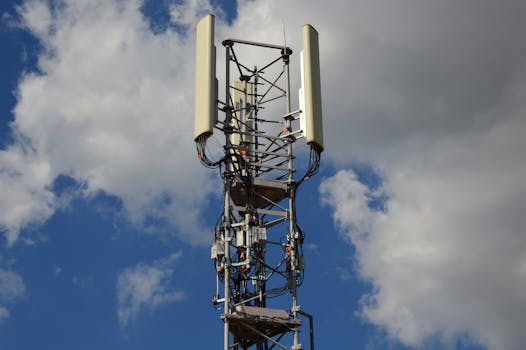 Photo: Ulrick Trappschuh / Pexels
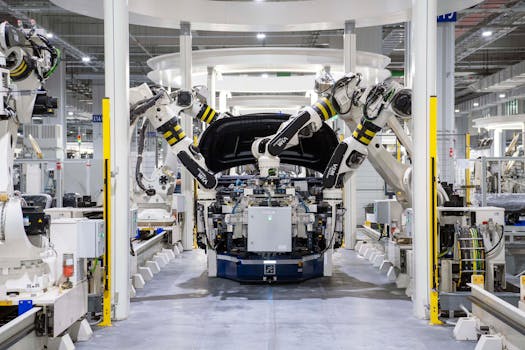 Photo: Hyundai Motor Group / Pexels
 Photo: 虎 曼 / Pexels
 Photo: Durgesh Kumar / Pexels