Unveiling the Future: How Do Electric Vehicles Work?
June 21, 2026 15 min read 2,980 words
Explore the innovative engineering behind electric vehicles and their transformative power for a sustainable future.
Discover EV Power
The Core Components of an Electric Vehicle
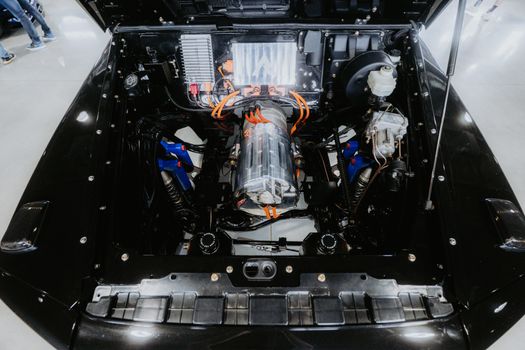 Photo: Luke Miller / Pexels
Understanding how electric vehicles work begins with a deep dive into their fundamental components. Unlike traditional gasoline-powered cars that rely on a complex internal combustion engine (ICE), EVs operate on a simpler, yet highly efficient, powertrain. At the heart of every EV is the battery pack, which serves as the primary energy storage unit. These aren't your typical AA batteries; modern EV battery packs are sophisticated arrays of lithium-ion cells, meticulously engineered for high energy density, power output, and longevity. They are often located in the floor of the vehicle, contributing to a lower center of gravity and improved handling. The size and capacity of the battery directly correlate with the vehicle's range, a crucial factor for many prospective buyers. A larger battery means more stored energy and, consequently, a longer distance an EV can travel on a single charge. However, larger batteries also mean more weight and potentially longer charging times, creating a delicate balance for engineers.
Connected to the battery is the inverter, a critical piece of electronics that acts as the bridge between the DC power stored in the battery and the AC power required by the electric motor. Electric motors, particularly the AC induction or permanent magnet synchronous motors commonly found in EVs, operate on alternating current. The inverter's role is to efficiently convert DC to AC, and also to manage the flow of power, controlling the motor's speed and torque based on driver input. This conversion process is highly efficient, contributing to the overall energy efficiency of EVs. Without the inverter, the battery's stored energy would be unusable by the motor. Its sophisticated control algorithms also play a vital role in regenerative braking, a key EV feature.
The electric motor itself is a marvel of engineering. Unlike a noisy, vibrating ICE, electric motors are remarkably quiet and deliver instant torque from a standstill. This is why EVs often feel incredibly responsive and accelerate quickly. There can be one or more electric motors in an EV, driving either the front wheels, rear wheels, or all four wheels, depending on the vehicle's design. For instance, many high-performance EVs feature separate motors for each axle, enabling advanced all-wheel-drive capabilities and precise torque vectoring. The motor's efficiency is paramount, as any energy lost as heat reduces the vehicle's range. Modern EV motors boast efficiencies upwards of 90%, far surpassing the typical 20-40% efficiency of gasoline engines. This inherent efficiency is a major reason for the lower running costs associated with EVs. Finally, the onboard charger is another essential component. While external charging stations provide AC power, the car's battery requires DC power. The onboard charger converts the incoming AC electricity from a Level 1 or Level 2 charging station into DC power that can be stored in the battery. For DC fast charging, the conversion happens externally at the charging station, bypassing the onboard charger. Understanding these core components is the first step in appreciating the sophisticated yet elegant simplicity of how electric vehicles work. For more on the different types of batteries, you can explore
battery technology advancements.
The Powertrain: From Battery to Wheel
Photo: Luke Miller / Pexels
The powertrain of an electric vehicle is fundamentally different from that of a gasoline car, and understanding its operation is key to grasping how electric vehicles work. In an EV, the journey of power begins with the high-voltage battery pack. This pack, often comprising hundreds or even thousands of individual lithium-ion cells, stores the electrical energy that will propel the vehicle. When the driver presses the accelerator pedal, a signal is sent to the vehicle's power electronics, particularly the inverter. The inverter's primary job is to take the direct current (DC) electricity from the battery and convert it into alternating current (AC). This conversion is crucial because most electric motors used in modern EVs operate on AC power. The inverter doesn't just convert the current; it also precisely controls the frequency and voltage of the AC power supplied to the motor, which directly dictates the motor's speed and torque output.
Once the AC power reaches the electric motor, a fascinating transformation occurs. The motor, through electromagnetic principles, converts this electrical energy into mechanical rotational energy. This rotational force is then transmitted to the wheels, typically through a simple, single-speed transmission or a direct drive system. Unlike multi-speed transmissions in gasoline cars, EVs often don't require complex gearboxes because electric motors deliver maximum torque from zero RPM. This characteristic simplifies the powertrain design, reduces mechanical losses, and contributes to the smooth, seamless acceleration that EVs are known for. The absence of gear changes also enhances the driving experience, making it more fluid and quiet.
One of the most innovative aspects of an EV powertrain is regenerative braking. When a driver lifts their foot off the accelerator or applies the brakes, the electric motor's role reverses. Instead of consuming electricity to drive the wheels, the kinetic energy of the moving vehicle is used to spin the motor. In this mode, the motor acts as a generator, converting kinetic energy back into electrical energy. This newly generated electricity is then sent back to the battery pack, effectively recharging it. Regenerative braking significantly improves an EV's efficiency, especially in stop-and-go city driving, where it can recover a substantial amount of energy that would otherwise be lost as heat in traditional friction brakes. It not only extends the vehicle's range but also reduces wear on the conventional brake pads, leading to lower maintenance costs.
The entire powertrain is managed by a sophisticated electronic control unit (ECU) or vehicle control unit (VCU). This central computer monitors various sensors, driver inputs, and vehicle conditions to optimize power delivery, energy regeneration, and overall performance. It ensures that the battery operates within safe temperature limits, that the motor receives the correct amount of power, and that the vehicle responds precisely to the driver's commands. The integration of these components – battery, inverter, motor, and control unit – creates a highly efficient and responsive system that defines the modern electric vehicle experience. This streamlined powertrain is a testament to the advanced engineering behind how electric vehicles work, offering a glimpse into the future of automotive design.
Charging Infrastructure and Battery Management Systems
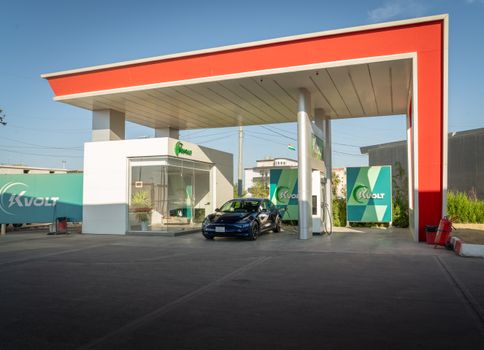 Photo: 04iraq / Pexels
A crucial aspect of understanding how electric vehicles work extends beyond the car itself to the ecosystem that supports it: charging infrastructure and sophisticated battery management systems (BMS). Charging an EV is fundamentally different from refueling a gasoline car. Instead of a quick stop at a gas station, EV charging can occur in various ways, categorized by their power output and speed. Level 1 charging uses a standard 120V household outlet, providing a slow trickle charge suitable for overnight charging at home for minimal daily commutes. Level 2 charging, typically found in homes (with a 240V outlet) and public charging stations, offers significantly faster charging, capable of fully recharging most EVs in several hours. This is the most common form of charging for daily use. The fastest option is DC Fast Charging (often referred to as Level 3 or DCFC), which bypasses the vehicle's onboard charger and directly feeds high-voltage DC power to the battery, allowing for an 80% charge in as little as 20-60 minutes, depending on the vehicle and charger. This is vital for long-distance travel.
The availability and reliability of charging infrastructure are paramount for EV adoption. Governments and private companies are rapidly expanding charging networks across the US, installing more Level 2 and DC Fast Chargers in urban centers, along highways, and at workplaces. Apps and in-car navigation systems now commonly integrate charging station locators, making planning longer trips much easier. The standards for charging connectors also play a role; in North America, the J1772 connector is standard for Level 1 and 2 AC charging, while CCS (Combined Charging System) is the dominant standard for DC Fast Charging for most non-Tesla vehicles. Tesla uses its proprietary Supercharger network and connector, though adapters are increasingly available to allow Teslas to use CCS chargers and vice-versa. The evolving nature of this infrastructure is a dynamic part of the EV landscape.
Equally important to the longevity and performance of an EV is its Battery Management System (BMS). The BMS is the brain of the battery pack, a complex electronic system that constantly monitors and controls various parameters of the battery cells. Its primary functions include monitoring individual cell voltage and temperature, balancing cell charges to ensure uniform degradation and maximum capacity, protecting against overcharging and over-discharging, and managing thermal conditions. Batteries perform optimally within a specific temperature range, and the BMS actively cools or heats the battery pack to maintain this ideal operating temperature, preventing damage and extending its lifespan. Without a sophisticated BMS, the high-voltage battery pack would be prone to rapid degradation, safety issues, and suboptimal performance. This system is crucial for ensuring the safety, reliability, and efficiency of how electric vehicles work.
The BMS also communicates critical information to the vehicle's main computer, such as state of charge (SOC), estimated range, and any potential fault conditions. This data is then displayed to the driver and used by the vehicle's control unit to optimize power delivery and regenerative braking. The advancements in BMS technology have been instrumental in improving EV range, battery life, and overall safety, addressing many early concerns about electric vehicles. As battery technology continues to evolve, so too will the sophistication of these management systems, further enhancing the capabilities and appeal of EVs. To learn more about how different types of batteries are managed, consider exploring
advanced energy storage solutions.
Benefits and Future Outlook of EVs
 Photo: Reinhard Bruckner / Pexels
The widespread adoption of electric vehicles is driven by a compelling array of benefits, both for individual consumers and for society at large. One of the most significant advantages is the environmental impact. EVs produce zero tailpipe emissions, meaning they do not release harmful pollutants like nitrogen oxides (NOx), particulate matter, or carbon monoxide into the atmosphere. This directly contributes to cleaner urban air quality and reduces respiratory illnesses. While the electricity used to charge EVs may come from fossil fuel sources in some regions, the overall lifecycle emissions of an EV, even when considering manufacturing and electricity generation, are typically lower than those of an equivalent gasoline car, especially as renewable energy sources become more prevalent in the grid. This makes EVs a cornerstone of efforts to combat climate change.
From a consumer perspective, EVs offer substantial economic benefits. Electricity is generally cheaper per mile than gasoline, leading to significant savings on fuel costs. Furthermore, EVs often require less maintenance than gasoline cars because they have fewer moving parts. There's no oil to change, no spark plugs to replace, and the regenerative braking system reduces wear on brake pads, extending their lifespan. Many governments offer incentives such as federal tax credits, state rebates, and access to HOV lanes, further reducing the total cost of ownership. The driving experience itself is also a major draw: EVs are remarkably quiet, offering a serene cabin environment, and their electric motors provide instant torque, resulting in smooth, powerful acceleration.
Looking to the future, the outlook for electric vehicles is incredibly promising. Battery technology continues to advance rapidly, with ongoing research focused on increasing energy density (more range per charge), reducing charging times, improving durability, and lowering production costs. Solid-state batteries, for example, are a next-generation technology that promises even greater energy density and safety. Charging infrastructure is expanding at an unprecedented pace, with more public and private charging options becoming available, addressing range anxiety. Vehicle-to-grid (V2G) technology is also emerging, allowing EVs to not only draw power from the grid but also feed electricity back into it, potentially stabilizing the grid and offering owners financial incentives. Autonomous driving features are also being integrated more seamlessly into EVs, leveraging their advanced electronic platforms.
The automotive industry is undergoing a monumental shift, with major manufacturers committing billions to EV research, development, and production. This investment is leading to a wider variety of EV models, from compact city cars to powerful trucks and SUVs, making electric transportation accessible to a broader demographic. The continuous innovation in how electric vehicles work, from battery chemistry to motor efficiency and smart charging solutions, ensures that EVs will play an increasingly central role in achieving a sustainable and efficient transportation system globally. The future of mobility is undoubtedly electric, and the pace of innovation suggests an exciting journey ahead for this transformative technology.