✓ VR gaming market expected to reach over $70 billion by 2028.
✓ Haptic feedback suits and gloves are becoming more sophisticated, enhancing immersion.
✓ Wireless VR headsets are improving resolution and reducing latency significantly.
✓ The integration of AI NPCs and procedural generation will create endlessly dynamic worlds.
How It Works
1
Advanced Headsets & Displays
Next-gen VR headsets will feature higher resolutions, wider fields of view, and lighter designs. Micro-OLED and pancake optics will deliver unparalleled visual clarity and comfort.
2
Enhanced Input & Interaction
Beyond controllers, full-body tracking, haptic suits, and brain-computer interfaces (BCIs) will allow for more natural and intuitive interaction. Players will feel and move within virtual worlds seamlessly.
3
Realistic Worlds & AI
Procedural generation, photogrammetry, and advanced AI will create vast, dynamic, and incredibly lifelike virtual environments. NPCs will react intelligently, enhancing immersion and replayability.
4
Connectivity & Social VR
Low-latency streaming and robust social platforms will enable seamless multiplayer experiences and the growth of persistent virtual worlds. The metaverse will become a tangible gaming reality.
The Evolution of VR Hardware: A Leap Towards True Immersion
Photo: SHVETS production / Pexels
The journey of virtual reality gaming has been one of relentless innovation, particularly in hardware. What began with rudimentary headsets offering limited fields of view and noticeable screen-door effects has rapidly evolved into sophisticated devices capable of delivering astonishingly immersive experiences. The future promises an even more dramatic transformation, pushing the boundaries of what we perceive as 'reality' within a game. We're on the cusp of a new era where the distinction between the virtual and the physical will become increasingly blurred, primarily driven by advancements in display technology, processing power, and ergonomic design.
Next-generation VR headsets are poised to redefine visual fidelity. We're moving beyond the current standard of LCD panels towards technologies like Micro-OLED and QLED, which offer significantly higher pixel densities, true blacks, and vibrant colors. This translates to resolutions that will render individual pixels virtually invisible, eliminating the 'screen-door effect' that has historically plagued VR. Coupled with wider fields of view (FOV) – approaching or even exceeding human peripheral vision – these displays will create a seamless, expansive vista that truly envelops the player. Imagine entering a virtual world where the horizon stretches as far as the eye can see, without any visual artifacts or limitations imposed by the hardware. Furthermore, advances in optical systems, such as pancake lenses, are dramatically reducing the size and weight of headsets. This will lead to more comfortable, less fatiguing VR sessions, addressing one of the primary barriers to widespread adoption. Lighter, more balanced headsets will allow for longer playtimes and a greater sense of freedom, encouraging players to spend more time exploring virtual realms. The days of bulky, cumbersome VR gear are quickly fading, making way for sleek, almost imperceptible devices that blend seamlessly with the user's head. This emphasis on comfort is not merely a luxury; it's a necessity for achieving true, prolonged immersion. As the hardware becomes less intrusive, the user's focus shifts entirely to the virtual world, enhancing the sense of presence and belief in the digital environment. The processing power embedded within these headsets or streamed wirelessly from powerful PCs will also see exponential growth. This will enable more complex graphics, larger open worlds, and more sophisticated physics simulations, all rendered at high refresh rates to prevent motion sickness and ensure a smooth, fluid experience. The convergence of these hardware improvements – superior displays, lightweight designs, and immense processing capability – will collectively unlock a new level of realism and engagement in virtual reality gaming, making the future of virtual reality gaming an incredibly exciting prospect for enthusiasts and newcomers alike. For those interested in the broader impact of these technologies, exploring the latest tech innovations can provide further context.
Beyond Controllers: The Rise of Haptic Feedback and Full-Body Immersion
Photo: SHVETS production / Pexels
While visual and auditory fidelity are crucial, the true magic of virtual reality lies in its ability to trick our senses into believing we are truly present in another world. This 'sense of presence' is profoundly enhanced by tactile feedback, and the future of virtual reality gaming is heavily invested in sophisticated haptic technologies. Current VR controllers offer basic rumble, but the next wave of innovation is bringing full-body haptics that will allow players to feel the rain, the impact of a punch, or the texture of a virtual object. Imagine not just seeing a virtual waterfall, but feeling the spray on your skin, or not just hearing a sword clang, but feeling the vibration of the impact reverberate through your arm. This level of sensory input transforms passive observation into active participation, deepening the emotional connection to the game world.
Haptic suits, gloves, and even footwear are rapidly evolving. These devices use an array of small motors, actuators, and thermal elements to simulate various sensations across the body. Companies are developing haptic vests that can simulate gunshots, explosions, or even the feeling of a monster breathing down your neck. Haptic gloves, meanwhile, are becoming incredibly precise, allowing users to 'feel' the shape, texture, and weight of virtual objects. This opens up entirely new gameplay mechanics, from intricate puzzle-solving that relies on touch to medical simulations where precise tactile feedback is critical. Beyond haptics, full-body tracking systems are becoming more accessible and accurate. These systems, whether camera-based or using inertial measurement units (IMUs) attached to the body, allow a player's real-world movements to be accurately mirrored by their in-game avatar. This means crouching, jumping, dodging, and even complex dance moves can be translated directly into the virtual environment, breaking down the barrier between player and avatar. The clunky, often imprecise tracking of early VR is being replaced by seamless, low-latency systems that provide a true 1:1 representation of movement. The integration of these full-body tracking and advanced haptic systems will create an unprecedented level of physical immersion. Players won't just see and hear the game; they will physically interact with it and feel its effects, transforming gaming from a visual experience into a full-sensory adventure. This profound shift in interaction paradigms promises to unlock entirely new genres and styles of gameplay, moving beyond traditional button presses to a more natural, intuitive, and deeply engaging form of entertainment. The potential for fitness-focused VR games, rehabilitation tools, and even professional training simulations will also expand dramatically with these advancements.
AI, Procedural Generation, and the Dawn of Dynamic Virtual Worlds
Photo: cottonbro studio / Pexels
The future of virtual reality gaming isn't solely about how we experience virtual worlds, but also about the worlds themselves. Two powerful technological forces—Artificial Intelligence (AI) and procedural generation—are converging to create game environments that are not just vast and detailed, but also dynamic, ever-changing, and uniquely responsive to player actions. Gone are the days of static, pre-scripted narratives and environments; the next generation of VR games will feature living, breathing worlds that evolve with every play session.
Procedural generation, the algorithmic creation of content, is already used in many games to generate landscapes, dungeons, and even entire planets. However, its application in future VR gaming will be far more sophisticated. Imagine an infinite universe where every planet, every creature, and every civilization is uniquely generated, offering truly endless exploration. This isn't just about random placement; advanced procedural generation will be guided by AI to ensure aesthetic coherence, logical ecosystem design, and compelling narrative hooks. This means that even if you visit the same type of biome twice, the specific layout, challenges, and discoveries will always be fresh, providing unparalleled replayability and a constant sense of wonder. The sheer scale and detail achievable through this method will be crucial for creating believable virtual realities that feel truly expansive. Complementing this is the exponential growth in AI capabilities. In current games, Non-Player Characters (NPCs) often follow predictable patterns, limiting the depth of interaction. Future VR games will feature AI NPCs driven by advanced machine learning models, capable of learning from player behavior, adapting their strategies, and even engaging in natural language conversations. These AI companions or adversaries won't just follow scripts; they will possess personalities, memories of past interactions, and the ability to make emergent decisions. This will lead to incredibly realistic social simulations, complex political systems within games, and enemies that genuinely challenge players with unpredictable tactics. Imagine an NPC who remembers a kindness you showed them hours ago and offers assistance, or an enemy AI that learns your combat style and adapts to counter it. Such intelligent agents will make every encounter feel unique and meaningful, fostering a deeper sense of connection and consequence within the virtual world. The combination of AI and procedural generation will also revolutionize quest design. Instead of static quest lines, players might encounter dynamically generated missions based on their actions, the state of the world, and the emergent needs of AI inhabitants. This creates a constantly evolving narrative tapestry, ensuring that no two players have the exact same experience. The future of virtual reality gaming will be defined by these intelligent, dynamic worlds that respond and adapt to the player, offering endless discovery and profound immersion. For a deeper understanding of the broader implications of AI, check out discussions on artificial intelligence advancements.
The Metaverse and Collaborative VR Gaming: A Social Revolution
Photo: Pavel Danilyuk / Pexels
The concept of the metaverse, a persistent, shared virtual space, is rapidly moving from science fiction to tangible reality, and virtual reality gaming will be at its epicenter. The future of VR gaming isn't just about individual immersive experiences; it's about connecting players in unprecedented ways, fostering communities, and building economies within these digital realms. The metaverse promises to be a global, interconnected network of virtual worlds, and gaming will serve as a primary gateway and activity within it.
Imagine logging into a persistent virtual world where you can meet friends from across the globe, attend virtual concerts, build custom homes, and then seamlessly jump into a high-stakes multiplayer VR game with them – all within the same interconnected ecosystem. This isn't just about joining a server; it's about inhabiting a digital identity that persists across different experiences, with your achievements, possessions, and social connections traveling with you. The underlying technology for this social revolution involves robust, low-latency networking, advanced avatar systems that allow for deep customization, and interoperable standards that enable assets and identities to move between different virtual spaces. The gaming aspect will benefit immensely from this interconnectedness. Multiplayer VR games will become more vibrant and populated, fostering larger communities and more diverse interactions. Esports in VR will gain a new dimension, with virtual stadiums filled with real-time spectators and professional players competing in physically demanding, highly immersive arenas. Beyond traditional competitive gaming, collaborative experiences will flourish. Players might team up to build massive structures in a shared creative space, run virtual businesses, or embark on cooperative adventures that span entire virtual galaxies. The economic implications are also significant. Non-fungible tokens (NFTs) and blockchain technology could underpin digital ownership within these metaverses, allowing players to truly own their in-game items, trade them, or even monetize content they create. This creates a player-driven economy that adds another layer of engagement and investment. The social aspect extends beyond gaming too; players might form persistent guilds, host virtual events, or simply hang out in digital cafes, blurring the lines between social networking and gaming. The metaverse, powered by advancements in VR, will transform gaming from a solitary or small-group activity into a global, interconnected social phenomenon, offering endless opportunities for shared experiences and community building. This will redefine how we interact, play, and even work within digital spaces, making the future of virtual reality gaming a deeply social and collaborative endeavor.
Key Challenges and Ethical Considerations in VR Gaming's Future
Despite the exhilarating prospects, the future of virtual reality gaming is not without its challenges and ethical considerations. Addressing these issues proactively will be crucial for sustainable growth and ensuring a positive impact on users. One primary challenge remains accessibility. While hardware is becoming more affordable, the initial investment for a high-quality VR setup can still be a barrier for many. Efforts to reduce costs, improve wireless streaming from cloud servers, and develop standalone headsets with increasing power are vital. Furthermore, ensuring VR experiences are comfortable for all users, minimizing motion sickness, and designing intuitive interfaces will be key to broadening the appeal beyond early adopters. The digital divide must not be exacerbated by the rise of VR.
Another significant concern is data privacy and security. As VR systems become more sophisticated, they will collect vast amounts of biometric data: eye-tracking, body movements, vocal inflections, and potentially even brain activity via BCIs. This data could be incredibly valuable for personalizing experiences but also poses significant privacy risks if not handled with the utmost care and transparency. Companies must implement robust security measures and clear data usage policies, and users must be empowered to control their own data. The potential for addiction and mental health impacts also needs careful consideration. Highly immersive virtual worlds could, for some individuals, become an escape from reality, leading to excessive use and neglecting real-world responsibilities. Game developers and platform providers have a responsibility to implement features that promote healthy usage, such as play-time limits, reality checks, and accessible support resources. The psychological effects of prolonged immersion, especially with increasingly realistic haptics and AI, warrant ongoing research and ethical guidelines.
Finally, the ethical implications of AI-driven NPCs and content generation are profound. As AI companions become more intelligent and emotionally responsive, questions arise about their 'sentience' and the nature of our interactions with them. What are the ethical boundaries of creating AI that can mimic human emotions or even form perceived relationships? How do we ensure that procedurally generated content avoids harmful biases or promotes responsible narratives? These are complex questions that require careful consideration from developers, ethicists, and the broader community. Navigating these challenges responsibly will be paramount to realizing the full, positive potential of the future of virtual reality gaming, ensuring it remains an enriching and safe experience for everyone.
**Tips for embracing the future of VR gaming:**
* **Start Small:** Don't feel pressured to buy the most expensive gear immediately. Entry-level standalone headsets offer fantastic experiences.
* **Prioritize Comfort:** Experiment with different headset adjustments, facial interfaces, and counterweights to find what works best for you.
* **Explore Diverse Genres:** VR offers unique experiences in everything from rhythm games to intricate simulations. Step out of your comfort zone.
* **Engage with Communities:** Join online forums and social platforms to discover new games, get tips, and connect with other VR enthusiasts.
* **Stay Informed:** Keep an eye on tech news and developer announcements to track the rapid advancements in hardware and software.
Comparison
Feature
Current VR Gaming (2023)
Future VR Gaming (2028+)
Impact on Player
Headset Resolution
2K-4K per eye
8K+ per eye, micro-OLED
Photorealistic visuals, no screen-door
Field of View (FOV)
90-110 degrees
150-180 degrees
Wider immersion, less tunnel vision
Input/Interaction
Hand controllers, basic haptics
Full-body tracking, haptic suits, BCIs
Natural movement, tactile feedback
World Generation
Mostly pre-designed, some procedural
AI-driven procedural, dynamic
Infinite, unique, evolving worlds
Social Interactivity
Multiplayer lobbies, limited social hubs
Persistent metaverse, global communities
Seamless social, shared experiences
Physical Comfort
Can be heavy, cable management
Lightweight, wireless, ergonomic
Longer play sessions, less fatigue
Latency
Noticeable in some cases
Near zero (sub-10ms)
Smoother movement, reduced motion sickness
Cost Barrier
Moderate to high
Potentially lower entry-level, higher premium
More accessible, but high-end remains investment
What Readers Say
★★★★★
"The future of virtual reality gaming is mind-blowing. I tried a prototype haptic suit at a demo, and feeling the virtual wind on my face was a game-changer. It's going to redefine what gaming feels like."
Alex Chen · Seattle, WA
★★★★★
"I'm so excited for the metaverse aspect. Imagine creating your own virtual hangouts and jumping into different games with friends from anywhere. It's not just gaming, it's a new social frontier."
Maria Rodriguez · Austin, TX
★★★★★
"As a developer, the advancements in AI and procedural generation for VR are incredible. We'll be able to create truly infinite, dynamic worlds that respond to players in ways never before possible, leading to unparalleled replayability."
David Lee · New York, NY
★★★★★
"While the technology is amazing, I hope future VR addresses comfort for longer sessions. My current headset can get heavy. If they nail the ergonomics, the future of virtual reality gaming will truly be limitless for everyone."
Sarah Jenkins · Denver, CO
★★★★★
"My son, who has limited mobility, found immense joy and freedom in a VR fitness game. The future full-body tracking and haptics will open up even more inclusive and empowering experiences for players of all abilities."
Omar Khan · Los Angeles, CA
Frequently Asked Questions
What is the biggest upcoming innovation in the future of virtual reality gaming?
The biggest upcoming innovation is likely the convergence of advanced haptic feedback systems and full-body tracking with sophisticated AI-driven procedural generation. This will create virtual worlds that are not only visually stunning and physically interactive but also dynamic, intelligent, and uniquely responsive to each player, blurring the lines between digital and physical reality.
Will VR gaming become more affordable in the future?
Yes, it is widely expected that VR gaming will become more affordable. While high-end, premium experiences will always exist, advancements in manufacturing, component miniaturization, and increased market competition will drive down the cost of entry-level and mid-range standalone VR headsets, making it accessible to a much broader audience.
How will brain-computer interfaces (BCIs) impact VR gaming?
BCIs could revolutionize VR gaming by allowing direct thought-based control and even sensory input, bypassing traditional controllers. This could enable incredibly intuitive interactions, thought-driven spell casting, or even direct emotional feedback from the game, leading to unprecedented levels of immersion and accessibility for players with physical limitations.
What are the potential costs associated with the future of virtual reality gaming?
The costs will likely vary. While standalone headsets may become more affordable (e.g., $300-$500), advanced full-body haptic suits, high-end PC-tethered systems, and specialized accessories could still represent a significant investment (e.g., $1000-$5000+). However, cloud streaming services might offer a way to access high-fidelity experiences without owning all the expensive hardware.
How will the future of virtual reality gaming compare to traditional console gaming?
The future of virtual reality gaming will offer a fundamentally different experience. While console gaming excels in narrative depth and competitive play on a screen, VR gaming provides unparalleled immersion, a sense of physical presence, and direct interaction with the game world. They will likely coexist, catering to different preferences, with VR offering a more visceral and experiential form of entertainment.
Who stands to benefit most from the advancements in VR gaming?
Everyone stands to benefit, from casual players seeking new entertainment to competitive gamers looking for deeper immersion in esports. Developers will gain new creative tools, while industries like education, healthcare, and training will leverage gaming VR technologies for simulations. Players with disabilities will also find new avenues for interactive and physical engagement.
Are there any health risks associated with the future of virtual reality gaming?
While VR technology is designed to be safe, potential risks include motion sickness (though improving with technology), eye strain from prolonged use, and psychological effects from highly immersive content. Developers and platforms are working on features like comfort settings, play-time reminders, and content warnings to mitigate these risks. Responsible usage is key.
What role will the metaverse play in the future of virtual reality gaming?
The metaverse will be the foundational layer for many future VR gaming experiences. It will provide persistent, interconnected virtual worlds where players can socialize, own digital assets, and seamlessly transition between different games and activities within a shared digital identity. Gaming will be a primary driver and activity within this expansive virtual ecosystem.
The future of virtual reality gaming isn't just about playing games; it's about stepping into new realities, connecting with others in profound ways, and experiencing entertainment on an entirely new plane. Embrace the revolution and prepare to be truly immersed in the next generation of digital worlds.

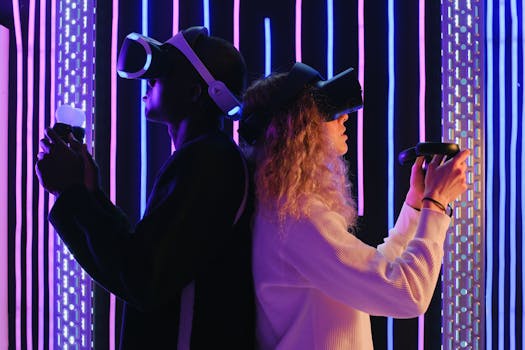 Photo: SHVETS production / Pexels
 Photo: SHVETS production / Pexels
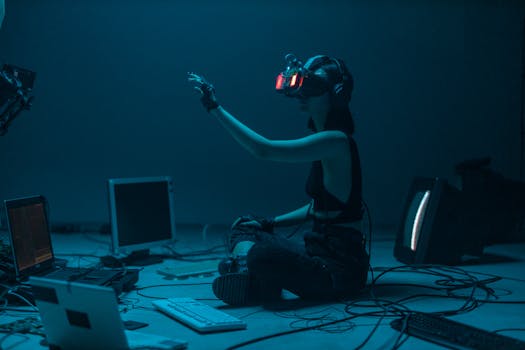 Photo: cottonbro studio / Pexels
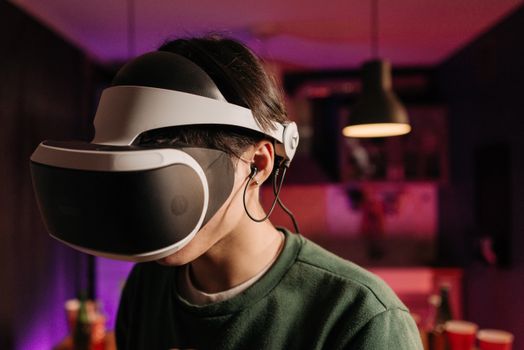 Photo: Pavel Danilyuk / Pexels