The 7 Best Portable Power Banks for Travel in 2024
best portable power banks for travel

The 7 Best Portable Power Banks for Travel in 2024

Keep your essential devices powered up no matter where your journeys take you, from city breaks to remote expeditions.

Find Your Perfect Power Bank

Key Takeaways

  • ✓ Battery capacity is measured in milliampere-hours (mAh), with higher numbers meaning more charges.
  • ✓ USB-C Power Delivery (PD) offers faster charging for compatible devices, including laptops.
  • ✓ Airline regulations limit power bank capacity to 100Wh (approx. 27,000mAh) for carry-on luggage.
  • ✓ Multiple output ports (USB-A, USB-C) increase versatility for charging various devices simultaneously.

How It Works

1
Charge the Power Bank

Before your trip, fully charge your portable power bank using a wall adapter, typically via a USB-C or Micro-USB input port. This ensures it's ready to provide power when you need it most.

2
Connect Your Device

Once your device (phone, tablet, camera, etc.) starts running low on battery, simply connect it to the power bank using the appropriate charging cable. Most power banks have USB-A or USB-C output ports.

3
Initiate Charging

Some power banks automatically begin charging upon connection, while others require you to press a power button to start the charging process. Always check the indicator lights to confirm charging has begun.

4
Recharge as Needed

Monitor your power bank's remaining charge level, usually shown via LED indicators. Once depleted, recharge it from a wall outlet or other power source to prepare for your next charging cycle.

Why a Portable Power Bank is Your Essential Travel Companion
A minimalist smartphone with a green screen on a wireless charger, ideal for tech mockups. Photo: cottonbro studio / Pexels
In an increasingly connected world, staying powered up on the go is no longer a luxury, but a necessity. From navigating unfamiliar streets with GPS to capturing breathtaking moments with your smartphone camera, or simply staying in touch with loved ones, our electronic devices are integral to the modern travel experience. Imagine being in a foreign city, your phone battery critically low, and no accessible power outlet in sight – a scenario that can quickly turn an exciting adventure into a stressful ordeal. This is precisely where the best portable power banks for travel become indispensable. They offer the freedom and peace of mind to explore without the constant anxiety of a dying battery. Portable power banks, often referred to as external batteries or portable chargers, are compact, rechargeable units designed to store electrical energy and deliver it to your devices when you're away from traditional power sources. Their utility extends far beyond just charging smartphones; they can power tablets, smartwatches, wireless headphones, e-readers, portable speakers, and even some laptops, depending on their capacity and output capabilities. For any traveler, whether a digital nomad, a weekend adventurer, or a family vacationer, a reliable power bank means uninterrupted connectivity and device functionality. No more huddling around airport outlets or desperately searching for a cafe with available sockets. With a good power bank, your personal power station travels with you. When considering the ideal power bank for your journeys, several factors come into play. Capacity, measured in milliampere-hours (mAh), dictates how many times a device can be charged. A 10,000mAh power bank, for instance, can typically charge a standard smartphone 2-3 times. For longer trips or multiple devices, a higher capacity like 20,000mAh or even 27,000mAh (the typical airline limit) might be more suitable. Portability is also key; a device designed for travel should be compact and lightweight enough to slip into a backpack or even a pocket without adding significant bulk. The number and type of output ports are crucial – do you need USB-A for older devices, or USB-C Power Delivery (PD) for faster charging of newer phones and laptops? Furthermore, safety features, durability, and airline compliance are paramount considerations. Investing in a high-quality power bank ensures not only efficient charging but also the longevity of your devices and your peace of mind while traveling. Explore more about essential travel tech in our guide on must-have travel gadgets. Beyond just convenience, a power bank can be a safety tool. In emergencies, having a charged phone can be critical for communication, navigation, or accessing emergency services. For those venturing into remote areas, where power outlets are scarce or non-existent, a robust power bank can be a lifeline. Consider a power bank with built-in flashlights for added utility. The best portable power banks for travel are designed with these diverse needs in mind, offering a blend of power, portability, and practical features that cater to every type of explorer. They transform the potential stress of low battery warnings into a non-issue, allowing you to fully immerse yourself in your travel experiences.

Decoding Power Bank Specifications: What to Look For
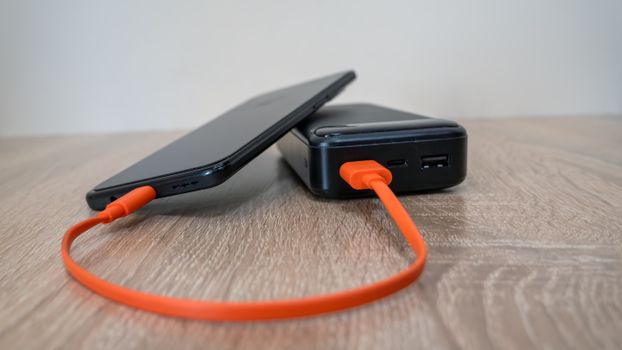
A smartphone charging via an orange cable connected to a power bank on a wooden surface. Photo: Eleonora Vokueva / Pexels
Choosing the best portable power bank for travel can seem daunting given the myriad of options available. Understanding the key specifications will empower you to make an informed decision that perfectly matches your travel style and device needs. The most critical specification is capacity, expressed in milliampere-hours (mAh). For reference, a typical smartphone battery ranges from 3,000mAh to 5,000mAh. A 10,000mAh power bank can usually provide 1-2 full charges for a tablet or 2-3 charges for a smartphone. If you're a heavy user, traveling for extended periods without access to power, or carrying multiple devices, a 20,000mAh or 27,000mAh power bank would be more appropriate. Remember the airline limit: most airlines restrict power banks to 100Wh (Watt-hours) in carry-on luggage, which roughly translates to 27,000mAh at 3.7V. Anything above 100Wh, up to 160Wh, requires airline approval, and anything above 160Wh is strictly prohibited. Another crucial aspect is the output ports and charging technology. Look for power banks with both USB-A and USB-C ports. USB-A is the traditional rectangular port, still widely used for many accessories. USB-C, on the other hand, is the newer, reversible port that supports faster charging protocols, particularly Power Delivery (PD). USB-C PD can deliver significantly more power (up to 100W on some power banks) compared to standard USB-A, allowing for rapid charging of compatible smartphones, tablets, and even laptops. If you own a modern smartphone, tablet, or laptop, a power bank with USB-C PD output is a game-changer for speed and efficiency. Some power banks also feature Quick Charge (QC) technology, primarily for Android devices, offering another fast-charging option. Input charging speed is equally important. How quickly can the power bank itself be recharged? A power bank with USB-C PD input can be fully recharged in a few hours, whereas one with only a Micro-USB input might take significantly longer, especially for higher capacities. This is vital when you have limited time between legs of your journey. Physical design and durability are also paramount for travel. Look for robust construction that can withstand the rigors of travel – drops, bumps, and varying temperatures. Compact size and light weight are always preferred, ensuring it doesn't become a burden in your luggage. Some power banks also include useful features like built-in LED flashlights, wireless charging pads, or even solar panels (though solar charging is typically very slow and best used for trickle charging or emergencies). Consider the number of devices you'll need to charge simultaneously; some power banks offer multiple output ports, allowing you to power up several gadgets at once. Finally, safety features are non-negotiable. Reputable brands incorporate safeguards against overcharging, over-discharging, short-circuiting, and overheating. These protections not only preserve the life of your power bank but also protect your valuable devices from potential damage. Always purchase from trusted manufacturers to ensure you're getting a product that adheres to safety standards. By carefully evaluating these specifications – capacity, output/input ports, charging technology (PD, QC), size/weight, durability, and safety features – you can confidently select a portable power bank that will serve as a reliable power source throughout all your adventures, keeping you connected and your devices ready for action.

Top Contenders: The Best Portable Power Banks for Travel in 2024
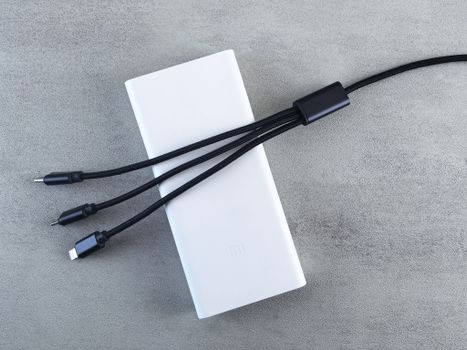
A sleek white power bank with a black multi-connector cable laid on a textured grey surface, emphasizing modern technology. Photo: Andrey Matveev / Pexels
Navigating the vast market of portable power banks can be overwhelming, but certain models consistently rise to the top for their reliability, performance, and travel-friendly features. Our top pick for the best overall portable power bank for travel in 2024 is the **Anker PowerCore III Elite 25600mAh 87W**. This powerhouse is a traveler's dream, boasting a massive 25,600mAh capacity, capable of charging most laptops once, and multiple charges for phones and tablets. Its 87W USB-C PD output means lightning-fast charging for compatible devices, including MacBook Pros and other USB-C laptops, making it ideal for digital nomads or those who need to work on the go. It also features two USB-A ports for charging additional gadgets simultaneously. Despite its high capacity, it remains within airline carry-on limits (94.72Wh), and its premium build quality ensures durability. The fast 60W USB-C input means it recharges itself quickly, a crucial advantage when you have limited time at an outlet. For those prioritizing extreme portability without sacrificing too much power, the **Anker PowerCore 10000 PD Redux** is an excellent choice. At just 10,000mAh, it's incredibly compact and lightweight, easily slipping into a pocket or small bag. It offers 18W USB-C PD output, enough to rapidly charge most smartphones and smaller tablets. It's perfect for day trips, weekend getaways, or as a backup for a single device. Its small footprint makes it a favorite among minimalist travelers. Another strong contender in the compact category is the **INIU Portable Charger 10000mAh**, known for its slim design and competitive price point, often featuring both USB-A and USB-C ports with decent charging speeds. If you need even more power and versatility, especially for charging larger devices or multiple gadgets over several days, the **Goal Zero Sherpa 100AC** stands out. While pricier and slightly larger, its 25,600mAh capacity (94.72Wh, airline compliant) is complemented by an integrated 100W AC outlet, allowing you to plug in anything from a laptop power brick to a drone battery charger. It also features multiple USB-A, USB-C PD (up to 60W), and a wireless charging pad, making it incredibly versatile for power-hungry travelers or those with diverse device ecosystems. For adventurers who might be off-grid for longer periods, pairing this with a portable solar panel (like Goal Zero's own Nomad series) creates a self-sustaining power solution. For budget-conscious travelers seeking a robust solution, the **Poweradd Pilot Pro 32000mAh** offers an impressive capacity (though be aware this exceeds the 100Wh airline limit and would need airline approval, typically being around 118.4Wh). It provides multiple USB-A outputs and often includes a DC output for older laptops, making it a versatile option for those with varied charging needs, though its bulkier form factor reflects its power. Alternatively, for a more budget-friendly and airline-safe high-capacity option, the **Charmast Portable Charger 26800mAh** delivers excellent value with USB-C PD and multiple USB-A ports, making it a reliable workhorse for extended trips. For more niche charging solutions, such as those optimized for specific brands or with unique features, explore our extensive guide on the best tech accessories for digital nomads.

Maximizing Your Power Bank's Lifespan and Travel Tips

A smartphone charging via an orange cable connected to a power bank on a wooden surface. Photo: Eleonora Vokueva / Pexels
To ensure your portable power bank remains a reliable travel companion for years to come, proper care and usage are essential. Firstly, always use the correct charging cables and adapters. Using low-quality or incompatible cables can lead to inefficient charging, overheating, and even damage to both your power bank and your devices. It's generally best to use the cables that came with your devices or certified replacements. Avoid completely draining your power bank before recharging it; modern lithium-ion batteries perform best when kept between 20% and 80% charge. While occasional full cycles are fine, consistently running it to zero can shorten its overall lifespan. Similarly, avoid overcharging by unplugging it once it reaches 100%, though most reputable power banks have built-in overcharge protection. Storage conditions also play a significant role. Store your power bank in a cool, dry place away from direct sunlight and extreme temperatures. High heat can degrade battery performance and even pose a safety risk. When storing for extended periods (e.g., between trips), it's best to leave it at around 50-60% charge rather than fully charged or completely empty. This helps maintain battery health. Protect your power bank from physical damage by keeping it in a protective case or a dedicated compartment in your bag, preventing it from getting knocked around or having heavy items placed on it. Water damage is another common culprit, so keep it away from spills and rain. When traveling, be mindful of airline regulations. As mentioned, power banks must always be carried in your carry-on luggage, never in checked baggage, due to fire safety concerns. The 100Wh limit is crucial; if your power bank is rated in mAh, you can convert it using the formula: Wh = (mAh * V) / 1000. Most power banks use a 3.7V nominal voltage. For example, a 27,000mAh power bank is (27000 * 3.7) / 1000 = 99.9Wh, which is just under the limit. Always check the Wh rating printed on your power bank, as some manufacturers might slightly exceed the limit with certain 27,000mAh models. If it's between 100Wh and 160Wh, you'll need airline approval, so it's always best to stick to models under 100Wh for hassle-free travel. Finally, integrate your power bank into your travel routine. Charge it fully the night before you depart. Always carry the necessary cables for all your devices. If you're traveling with companions, consider a power bank with multiple output ports so you can share the charging capabilities. For international travel, remember you'll still need a travel adapter for the wall charger to recharge the power bank itself. By following these tips, your portable power bank will reliably keep your devices charged, allowing you to focus on enjoying your travel experiences without interruption.

Comparison

FeatureAnker PowerCore III Elite 25600mAhAnker PowerCore 10000 PD ReduxGoal Zero Sherpa 100AC
Capacity (mAh)256001000025600
Max USB-C PD Output87W18W60W
AC Outlet✓ (100W)
Wireless Charging
Airline Carry-on Safe (Wh)94.723794.72
Weight (approx.)1.2 lbs0.4 lbs2 lbs
Best ForLaptop & multiple devicesSmartphones & light useDiverse devices, off-grid

What Readers Say

"My Anker PowerCore III Elite is a lifesaver for long flights and layovers. I can charge my MacBook and phone simultaneously, and it still has juice left. Definitely one of the best portable power banks for travel I've owned."

Sarah J. · Denver, CO

"The Anker PowerCore 10000 PD Redux is perfect for my weekend trips. It's so small, fits in my pocket, and gives my iPhone 14 Pro two full charges. Never leave home without it now."

Mark D. · Austin, TX

"I used the Goal Zero Sherpa 100AC on a camping trip and it exceeded expectations. The AC outlet powered my portable fan and charged my drone batteries. It's pricey but worth every penny for serious adventurers."

Emily R. · Seattle, WA

"The Charmast 26800mAh power bank is fantastic value. It's a bit heavier than my old one, but the USB-C PD charges my tablet really fast. Only wish the input charging was a little quicker."

David L. · Miami, FL

"As a digital nomad, having reliable power is everything. My Anker PowerCore III Elite ensures my laptop and phone are always ready, even when café outlets are scarce. It's truly one of the best portable power banks for travel for professionals."

Jessica M. · New York, NY

Frequently Asked Questions

What capacity (mAh) do I need for a portable power bank for travel?

The ideal capacity depends on your devices and trip duration. For a smartphone, 10,000mAh is usually sufficient for 2-3 charges. For multiple devices or tablets, 20,000mAh is better. If you need to charge a laptop, look for 25,000mAh to 27,000mAh with USB-C PD output, ensuring it remains within airline limits.

Are portable power banks safe to take on an airplane?

Yes, but with strict regulations. Power banks must always be carried in your carry-on luggage, never in checked baggage. Most airlines allow power banks up to 100Wh (approximately 27,000mAh at 3.7V). Power banks between 100Wh and 160Wh require airline approval, and anything above 160Wh is prohibited.

How do I know if my power bank has Power Delivery (PD)?

Look for 'PD' or 'Power Delivery' explicitly mentioned in the product specifications, usually associated with the USB-C port. PD allows for faster, more efficient charging of compatible devices, including many modern smartphones, tablets, and laptops. The wattage (e.g., 18W, 45W, 60W, 87W) indicates the speed.

Are more expensive power banks always better for travel?

Not necessarily, but there's a correlation with quality and features. More expensive power banks often offer higher capacity, faster charging (USB-C PD), more output ports, better durability, and advanced safety features. However, excellent budget-friendly options exist that provide great value for basic smartphone charging needs. Balance your budget with your specific travel and device requirements.

Can I charge my laptop with a portable power bank?

Yes, but only with power banks that support USB-C Power Delivery (PD) with sufficient wattage (typically 45W or higher). Standard USB-A ports won't provide enough power. Look for power banks explicitly stating laptop compatibility and check your laptop's charging requirements to ensure compatibility.

Who should prioritize a high-capacity portable power bank?

Travelers who are frequently off-grid, digital nomads, photographers/videographers, or those carrying multiple power-hungry devices (laptops, tablets, drones) should prioritize high-capacity power banks (20,000mAh+). It ensures sustained power availability for extended periods without access to wall outlets.

What are common mistakes to avoid with travel power banks?

Common mistakes include forgetting to charge the power bank before a trip, carrying it in checked luggage, using faulty cables, exposing it to extreme temperatures, and ignoring airline capacity limits. Always read the manufacturer's instructions and airline guidelines.

What is the future trend for portable power banks for travel?

Future trends point towards even higher power output (especially for USB-C PD), increased efficiency, smaller form factors for a given capacity, and potentially more integrated smart features like app control or enhanced battery health monitoring. Solid-state batteries could also revolutionize safety and energy density.

Don't let a dead battery derail your next adventure. Invest in one of the best portable power banks for travel today and ensure your devices are always charged, keeping you connected and ready to capture every moment. Choose wisely and travel smarter!

Topics: best portable power banks for traveltravel power bankportable charger for travelusb power bankairline safe power bank
Leo List
Brampton weed
Adultwork EstrelaBet Vai de Bet R7 Bet Betão Galera Bet Rainbet Bet9ja Shop SportyBet BetKing Sisal Loto Foot Hollywoodbets YesPlay Odibets RushBet Jugabet BetWarrior BetCity MSport betPawa Fortebet