Find the best portable power bank for travel today!
August 26, 2026 16 min read 3,242 words
Keep your essential devices charged and ready, no matter where your adventures take you, with our expert guide.
Charge Up Your Journey
Understanding Portable Power Bank Essentials for Travelers
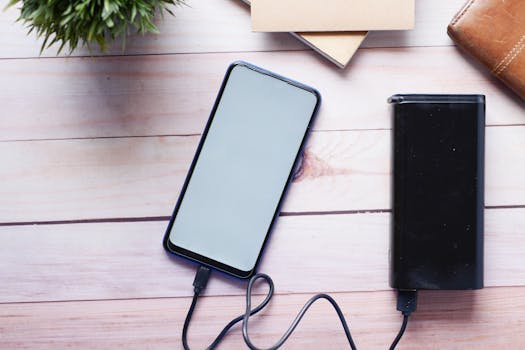 Photo: Towfiqu barbhuiya / Pexels
Embarking on a journey, whether it's a cross-country road trip or an international flight, often means relying heavily on our electronic devices. From navigating unfamiliar streets with GPS to capturing breathtaking photos, staying connected and powered up is paramount. This is where the best portable power bank for travel becomes an indispensable companion. But with a market flooded with options, how do you discern what truly makes a power bank 'travel-ready' and suited for your specific needs? It begins with understanding the core components and specifications that dictate performance and convenience.
First and foremost, capacity is king. Measured in milliampere-hours (mAh), this figure tells you how much energy the power bank can store and, consequently, how many times it can charge your devices. For a typical smartphone, a 10,000 mAh power bank might offer 2-3 full charges, while a 20,000 mAh unit could provide 4-6 charges, or even power a tablet. Travelers who carry multiple devices, like a phone, tablet, and wireless earbuds, or those embarking on extended trips away from power outlets, should prioritize higher capacities, often in the 20,000 mAh to 26,800 mAh range. However, it's crucial to note that for air travel, the Federal Aviation Administration (FAA) restricts power banks to a maximum of 100 watt-hours (Wh) in carry-on luggage, with some airlines allowing up to 160 Wh with prior approval. Most 26,800 mAh power banks fall just under the 100 Wh limit, making them ideal for flights. Always check the Wh rating on your power bank and your airline's specific regulations before flying to avoid any issues at security.
Next, consider the output ports and charging technology. Modern power banks typically feature a combination of USB-A and USB-C ports. USB-A is the traditional rectangular port, while USB-C is the smaller, reversible oval port that has become the standard for many new devices, offering faster charging speeds and often supporting power delivery (PD). Power Delivery (PD) is a critical feature for fast-charging compatible smartphones, tablets, and even some laptops. If your devices support PD, ensure your power bank does too, as this can dramatically reduce charging times. Similarly, Qualcomm Quick Charge (QC) is another fast-charging standard primarily found on Android devices. A good travel power bank will often include at least one USB-C PD port and one or more USB-A ports, ideally with QC support, to accommodate a wide range of gadgets. The number of ports also matters; if you frequently charge multiple devices simultaneously, look for a power bank with at least two or three output ports. Having multiple ports allows you to charge your phone, a friend's device, or your earbuds all at once, maximizing efficiency during your travels. For more insights on maximizing device battery life, consider exploring
optimizing gadget battery life.
Finally, the physical attributes of a power bank – its size, weight, and durability – are paramount for travel. A bulky, heavy power bank can quickly become a nuisance in a carry-on or backpack. Look for compact, lightweight designs that don't compromise on capacity. Many manufacturers are now producing slim, ergonomic power banks that are easy to slip into a pocket or small bag. Durability is also key; travel can be rough on electronics. Opt for power banks made from robust materials that can withstand minor bumps and drops. Features like a textured finish for better grip or water resistance can add an extra layer of protection, especially for adventurous travelers. Understanding these fundamental aspects will empower you to make an informed decision, ensuring you select the best portable power bank for travel that aligns perfectly with your wanderlust.
Top Contenders: The Best Portable Power Banks for Every Traveler
Photo: Towfiqu barbhuiya / Pexels
Navigating the vast landscape of portable power banks can be daunting, but certain models consistently rise to the top, offering a blend of capacity, charging speed, and portability that makes them ideal for various travel scenarios. We've meticulously evaluated several leading options to help you pinpoint the best portable power bank for travel, catering to different needs and budgets.
For the ultimate all-rounder, the Anker PowerCore III Elite 25600mAh 87W PD is a formidable choice. This powerhouse boasts a near-maximum permissible capacity for air travel, providing multiple charges for smartphones and even capable of significantly recharging USB-C laptops like MacBooks or Dell XPS models. Its 87W USB-C Power Delivery output is exceptionally fast, allowing you to top up compatible devices in record time. It also includes two USB-A ports for older gadgets, making it incredibly versatile. While slightly larger and heavier than some lower-capacity options, its robust build and high-speed charging capabilities justify the trade-off for travelers who prioritize power and efficiency. This unit is perfect for digital nomads, business travelers, or anyone who can't afford to be without power for their essential work or entertainment devices.
If compact size and lightweight design are your top priorities, especially for day trips or minimal packing, the Anker PowerCore Slim 10000 PD is an excellent contender. This sleek power bank offers 10,000mAh of capacity, enough for 2-3 smartphone charges, and features a USB-C PD port for fast charging. Its slim profile makes it incredibly easy to slip into a pocket or small purse without adding noticeable bulk. It’s perfect for tourists exploring a city all day, hikers needing a quick phone boost, or anyone who wants a reliable backup without the extra weight. While it won't charge a laptop, its portability and fast charging for phones make it a highly practical choice for everyday travel.
For the adventurous and rugged traveler, the BioLite Charge 80 PD stands out. This power bank combines a substantial 20,000mAh capacity with a durable, splash-proof design, making it suitable for outdoor excursions. It features a 15W USB-C PD output, which is respectable for fast phone and tablet charging, alongside two USB-A ports. What sets it apart is its robust construction, designed to withstand the elements, making it an ideal companion for camping, hiking, or beach trips where conventional power banks might be vulnerable. Its integrated battery indicator is clear and easy to read, even in challenging conditions. While not the absolute fastest charger on the market, its resilience and ample capacity make it a top pick for those whose travels take them off the beaten path.
Finally, for budget-conscious travelers who still demand reliability, the RAVPower 20000mAh PD Pioneer offers exceptional value. This power bank provides a generous 20,000mAh capacity with 18W USB-C PD and Quick Charge 3.0 support for its USB-A port, all at a very competitive price point. It’s a slightly larger unit but still manageable for most carry-on situations. The RAVPower brand has a strong reputation for producing dependable charging accessories, and this model is no exception. It's a fantastic option for students, backpackers, or anyone looking for a high-capacity, fast-charging solution without breaking the bank. Each of these options represents a strong candidate for the best portable power bank for travel, depending on your specific journey and device ecosystem. Choosing the right one means balancing capacity, speed, size, and budget to perfectly match your travel style.
Maximizing Your Portable Power Bank's Performance and Longevity
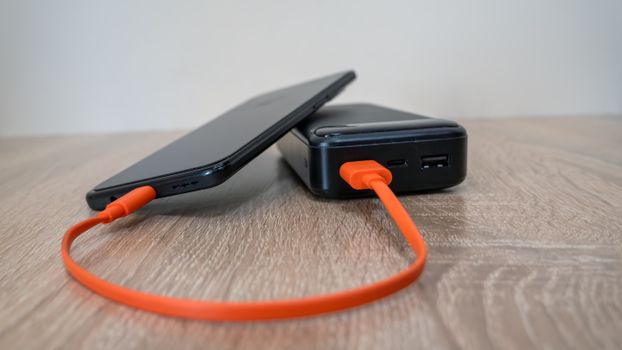 Photo: Eleonora Vokueva / Pexels
Acquiring the best portable power bank for travel is only half the battle; understanding how to properly use and maintain it will ensure it serves you reliably for countless journeys. Proper usage not only optimizes its performance during your trips but also significantly extends its overall lifespan, protecting your investment. There are several key practices that every traveler should adopt to get the most out of their portable charging companion.
Firstly, always fully charge your power bank before embarking on any trip. While it might seem obvious, many travelers overlook this step, only to find their power bank partially charged when they desperately need it. Most modern power banks come with LED indicators that clearly show the charging progress and current battery level. Wait until all indicator lights are solid or the display shows 100% before unplugging. For initial use, it's often recommended to fully charge and then fully discharge the power bank a couple of times to calibrate its battery, though this is less critical with newer lithium-ion technologies. When charging the power bank itself, use a wall adapter that matches its input specifications, especially if it supports fast input charging via USB-C PD. Using a low-power adapter will take significantly longer to charge a high-capacity power bank, which can be inconvenient when you're on a tight schedule.
Secondly, avoid completely draining your power bank's battery whenever possible. While modern lithium-ion batteries are more resilient than older battery types, consistently discharging them to 0% can still contribute to a shorter lifespan over time. Aim to recharge your power bank when it reaches around 20-30% capacity. Similarly, storing a power bank fully charged for extended periods (months) is also not ideal. If you know you won't be using it for a while, charge it to about 50-70% for optimal long-term storage. This practice helps maintain the chemical stability of the battery cells, prolonging their effectiveness. Additionally, be mindful of the environment where you store and use your power bank. Extreme temperatures, both hot and cold, can degrade battery performance and potentially pose safety risks. Avoid leaving your power bank in direct sunlight, in a hot car, or in freezing conditions. For more detailed information on battery care, you might find this guide on
extending battery life on mobile devices helpful.
Thirdly, use appropriate cables for charging your devices. While any USB cable might seem to work, using high-quality, certified cables that support fast charging standards (like USB-C PD or Quick Charge) will ensure you get the maximum charging speed your power bank and device can offer. Cheap or damaged cables can not only slow down charging but can also be inefficient, wasting precious power bank capacity, or even pose a safety hazard. Always carry a spare, reliable cable for your primary devices. Finally, regularly inspect your power bank for any signs of damage, such as swelling, cracks, or unusual odors. A swollen battery is a serious safety concern and indicates that the power bank should be immediately and safely disposed of. By adhering to these simple yet effective practices, your best portable power bank for travel will remain a dependable source of power, keeping you connected and worry-free throughout all your adventures.
Common Mistakes to Avoid When Choosing and Using Travel Power Banks
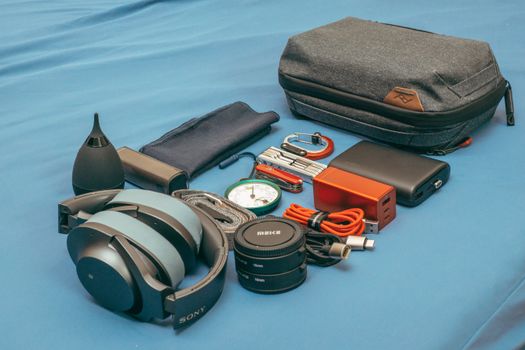 Photo: FOX ^.ᆽ.^= ∫ / Pexels
Even with the best intentions, travelers often make common mistakes when selecting and utilizing portable power banks, which can lead to frustration or even safety hazards. Being aware of these pitfalls can save you time, money, and ensure a smoother travel experience. Avoiding these errors is just as important as knowing what features to look for when choosing the best portable power bank for travel.
One of the most frequent mistakes is underestimating capacity needs. Many travelers purchase a power bank based solely on price or a vague idea of 'enough,' only to find it insufficient for their trip. A 5,000 mAh power bank might be fine for a short day trip and a single phone, but it will quickly fall short if you're traveling for several days, carrying multiple devices (phone, tablet, earbuds, camera), or if your phone battery is older and less efficient. Always calculate your estimated daily power consumption and then choose a power bank that offers at least 2-3 times that amount for comfortable travel. Err on the side of higher capacity, especially for longer trips or remote destinations where charging opportunities are scarce.
Another common oversight is neglecting airline regulations. As mentioned, power banks exceeding 100 Wh (watt-hours) are often restricted or require airline approval for carry-on luggage, and are universally prohibited in checked luggage. Many travelers only look at mAh, not realizing how it translates to Wh. The conversion is simple: Wh = (mAh * V) / 1000, where V is the nominal voltage (usually 3.7V for lithium-ion). A 26,800 mAh power bank at 3.7V is approximately 99.16 Wh, just under the limit. Always check the Wh rating printed on the power bank itself and confirm with your airline before flying to avoid confiscation at security.
Furthermore, many users overlook the importance of charging speed and port compatibility. Buying a high-capacity power bank is great, but if it only offers slow 5W charging, you'll be waiting hours for your devices to top up. Ensure your chosen power bank supports fast charging standards like USB-C PD (Power Delivery) or Quick Charge (QC) if your devices are compatible. Similarly, relying on a power bank with only USB-A ports when all your new devices use USB-C means you'll need adapters or different cables, adding inconvenience. Always match the power bank's output ports and charging technologies to your primary devices.
Lastly, ignoring safety certifications and brand reputation can be a costly mistake. The market is flooded with cheap, unbranded power banks that may not adhere to safety standards. These can be prone to overheating, overcharging, or even catching fire, posing a significant risk, especially in confined travel spaces. Always opt for reputable brands like Anker, RAVPower, BioLite, or Jackery, which invest in quality control and incorporate essential safety features like overcharge, over-discharge, short-circuit, and temperature protection. A slightly higher upfront cost for a certified, reliable power bank is a small price to pay for peace of mind and safety during your travels. Avoid these common pitfalls, and your best portable power bank for travel will be a true asset.
